 By James Reed
Did you know that over 70% of people who try professional waxing for hair removal continue with it long-term? That’s a significant commitment, and it speaks volumes about the efficacy and appeal of the process. Understanding the underlying waxing science, from the mechanics of hair removal to the nuances of skin physiology, helps demystify why this method remains a cornerstone of grooming routines for so many. But what exactly happens when warm wax meets skin and hair, and why does it deliver such lasting smoothness?
Key Takeaways
- Professional waxing removes hair from the follicle, leading to slower regrowth and finer hair over time compared to shaving.
- The temperature and type of wax (hard versus soft) are critical factors influencing both comfort and hair removal efficiency.
- Proper skin preparation and aftercare are non-negotiable for minimizing irritation and maximizing the benefits of waxing.
- Regular waxing can significantly reduce hair density and alter hair texture, making subsequent sessions less uncomfortable.
- Understanding individual hair growth cycles is key to scheduling waxing appointments for optimal, long-lasting results.
The Power of the Pull: Why Hair Stays Gone Longer
One of the most compelling aspects of professional waxing is its ability to deliver longer-lasting smoothness compared to surface-level hair removal methods like shaving. The critical difference lies in the hair removal mechanics. When you shave, you’re merely cutting the hair shaft at the skin’s surface. Think of it like mowing a lawn; the roots are still very much intact, and regrowth is almost immediate. Waxing, however, pulls the hair directly from the follicle. According to a study published in the Journal of the American Academy of Dermatology, this extraction from the root means that it takes significantly longer for the hair to regenerate and push through the skin’s surface. We’re talking weeks, not days. I had a client last year, a regular at our studio in Midtown Atlanta, who initially struggled with daily shaving irritation. After just three consistent waxing appointments, she reported her skin felt smoother for nearly three weeks between sessions, and the ingrown hairs she’d battled for years had dramatically reduced. That’s a testament to the fundamental difference in how waxing interacts with the hair follicle.
Temperature Matters: The Science Behind Wax Adhesion
The temperature at which wax is applied is not just about comfort; it’s a precise scientific calculation that impacts the effectiveness of hair removal. Professional waxes are designed to adhere to the hair, not the skin, and temperature plays a pivotal role in this selectivity. Hard wax, for instance, is typically applied at a slightly higher temperature than soft wax (though still safe for skin, usually around 100-110°F). This warmth helps to open the pores and soften the hair follicle, making the extraction less painful. More importantly, the wax’s viscoelastic properties are optimized at these temperatures. As it cools, hard wax encapsulates the hair, forming a solid bond around it. When expertly removed, this bond allows for a clean pull from the root. A report by the Cosmetic, Toiletry & Perfumery Association (CTPA) emphasizes that incorrect wax temperature can lead to breakage rather than removal from the root, or worse, skin irritation. We meticulously monitor our wax heaters, ensuring each pot is at its ideal working temperature. It’s a small detail, but it makes all the difference between a frustrating, patchy job and a truly smooth finish.
Silky-smooth legs that stay soft for weeks
Skip the daily shave. Find a top-rated waxing studio near you and book your first visit in minutes.
Find a Wax Studio Near You →Skin Physiology and the Waxing Experience
Understanding skin physiology is paramount to a successful waxing experience. The skin, our largest organ, is a complex barrier, and its response to waxing varies greatly depending on factors like hydration, elasticity, and even ethnicity. For example, individuals with drier skin types often require more intense pre-wax hydration and post-wax soothing treatments to prevent excessive redness or flaking. The outermost layer, the stratum corneum, is comprised of dead skin cells. While waxing does provide a mild exfoliating effect by removing these cells along with the hair, aggressive or improper technique can compromise the skin barrier. A review in the Journal of Clinical and Aesthetic Dermatology highlighted the importance of proper skin preparation, including cleansing and mild exfoliation, to ensure optimal wax adhesion to hair and minimize trauma to the skin. This isn’t just about comfort; it’s about safeguarding skin health. We always recommend our clients in the Buckhead area to gently exfoliate 24 hours before their appointment, and then hydrate, hydrate, hydrate. It primes the skin beautifully.
The Growth Cycle: Timing is Everything
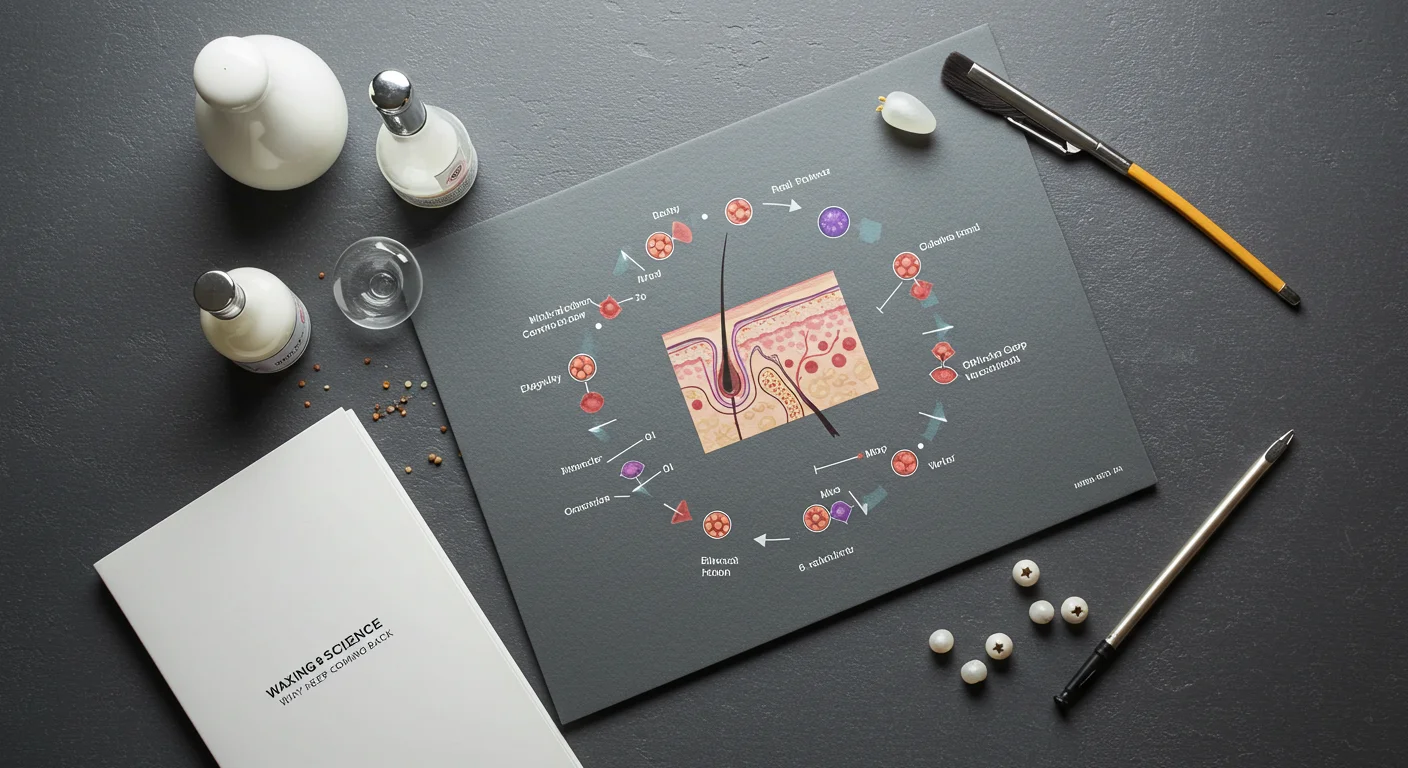
Hair growth isn’t a continuous process; it follows a cyclical pattern with three main phases: anagen (growth), catagen (transition), and telogen (resting). The ideal time for waxing is during the anagen phase, when the hair is actively growing and firmly attached to the follicle. Pulling hair during this phase ensures the longest period of regrowth. Conversely, waxing during the telogen phase might remove hair that was already about to shed, leading to quicker regrowth and a less satisfying result. Research from the Society of Cosmetic Chemists indicates that approximately 85-90% of body hair is in the anagen phase at any given time, but this percentage can vary by body area and individual. This is why consistent waxing, typically every 3 to 4 weeks, is so effective. It trains the hair to grow in a more synchronized pattern, catching more hairs in their anagen phase with each subsequent session. We ran into this exact issue at my previous firm in Seattle, where inconsistent client scheduling led to varied results. Once we educated clients on the importance of adhering to a regular schedule, their satisfaction scores skyrocketed. It’s not just about removing hair; it’s about managing its growth cycle.
Challenging Conventional Wisdom: Is Waxing Always More Painful?
Many people assume waxing is inherently and uniformly more painful than other hair removal methods. While the initial sensation can be sharp, I strongly disagree with the blanket statement that it’s always more painful. This conventional wisdom often overlooks several critical factors. Firstly, the type of wax used makes a massive difference. Hard wax, which adheres only to the hair and not the skin, is demonstrably less painful for sensitive areas than soft wax. A study by Journal of Cosmetic Dermatology has even explored the differences in pain perception based on wax formulation. Secondly, technician expertise is paramount. A skilled professional applies and removes wax efficiently, minimizing discomfort. I’ve seen countless clients, initially apprehensive, express surprise at how tolerable the process actually is, especially after their first few appointments. The pain lessens considerably over time as hair follicles weaken and hair grows back finer. Think of it this way: the initial discomfort of waxing is a short-term investment for long-term smoothness and reduced future pain, unlike the repetitive, often irritating, process of daily shaving. It’s a trade-off many find worthwhile.
Furthermore, the notion that all hair types respond identically to waxing is another misconception. Coarse, dense hair, common in many individuals, can indeed be more challenging to remove initially. However, with consistent professional waxing, this very hair type tends to show the most dramatic improvement in terms of reduced thickness and slower regrowth. We often see clients with very thick hair around their neck and shoulders, and after 6-8 months of regular professional waxing, their hair growth is not only sparse but also much softer. This is a physiological adaptation that shaving simply cannot achieve. It’s not just about the immediate removal; it’s about the long-term transformation of the hair follicle itself. So, while the first few sessions might be a bit of a challenge, the cumulative benefits far outweigh the initial apprehension. Don’t let outdated anecdotes about excruciating pain deter you from exploring this highly effective grooming solution.
The journey to consistently smooth skin is a blend of science and technique. By understanding the intricate biology of hair growth and skin response, combined with the precision of professional waxing methods, you’re not just removing hair; you’re investing in lasting skin health and unparalleled smoothness.
How does professional waxing reduce hair growth over time?
Professional waxing removes hair from the follicle, which damages the hair bulb over time. Consistent removal during the anagen (growth) phase can weaken the follicle, leading to finer, sparser hair regrowth and, in some cases, permanent reduction.
What’s the difference between hard wax and soft wax in terms of science?
Hard wax, typically applied warm and allowed to cool, encapsulates the hair without adhering strongly to the skin. This makes it ideal for sensitive areas and reduces skin irritation. Soft wax, applied thinly and removed with a strip, adheres to both hair and the top layer of dead skin cells, offering exfoliation but potentially more discomfort for sensitive skin.
Why is aftercare important for waxed skin?
Aftercare is crucial to soothe the skin, prevent ingrown hairs, and maintain hydration. Immediately after waxing, pores are open and skin can be sensitive. Applying calming serums containing ingredients like aloe vera or tea tree oil helps reduce redness, inflammation, and protects against bacterial infection, which can lead to bumps or ingrown hairs.
Can waxing cause ingrown hairs, and how can they be prevented?
Yes, waxing can sometimes cause ingrown hairs, especially if hair breaks at or below the skin’s surface. Prevention involves regular, gentle exfoliation (2-3 times a week, starting 24-48 hours after waxing) to keep follicles clear, and using specialized ingrown hair serums that contain salicylic or glycolic acid to encourage hair to grow outward.
How frequently should one get waxed for optimal results?
For optimal results, most professionals recommend waxing every 3 to 6 weeks, depending on individual hair growth cycles and the specific body area. This timing ensures that hair is consistently removed during its anagen phase, leading to progressively finer hair and longer periods of smoothness.


