 By Editorial Team
I see it all the time: someone gets excited about a solo trip, imagining weeks of freedom and adventure, but the sheer amount of planning freezes them in their tracks. The logistics, the safety questions, the fear of the unknown, it turns a dream into a chore. So they cancel, or they settle for a group tour that wasn’t what they wanted. How do you actually get ready for a two-week solo trip that gives you that sense of independence without the chaos?
Key Takeaways
- Give yourself a solid four weeks to plan. This gives you time to book the essentials without rushing and leaves your itinerary flexible.
- Do your safety homework. Research local norms, save emergency numbers, and book secure spots to stay, like hotels with a 24/7 front desk.
- Build a realistic budget and add a 20% contingency fund. This is your safety net for everything from a missed train to a medical issue.
- Pack light and smart. A small capsule wardrobe and some packing cubes are your best friends for staying mobile.
- Get ready to adapt. Things will change, and plans will break. Seeing those moments as part of the adventure is the key to a great solo experience.
The Initial Stumble: Why Many Solo Travel Plans Fail Before Takeoff
So many would-be solo travelers get tripped up right at the start, and it’s usually for the same few reasons. The biggest mistake I see is just not giving the planning process enough time. People think they can book a flight for a two-week trip and just “figure it out,” but that almost always ends in stress and wasted money. I had a client, Sarah, who decided on a whim to book a two-week trip to Kyoto for late 2025. She gave herself one weekend to plan, booked flights and an Airbnb, and that was it. When she got there, she realized the Airbnb was miles from any public transport, forcing her to burn through her budget on taxis. She hadn’t looked into local SIM cards, so she was stuck hunting for Wi-Fi, and her suitcase was full of clothes that were completely wrong for Kyoto’s chilly autumn weather.
Another huge issue is not having a clear goal for the trip. If you don’t know if you’re going for cultural immersion, a nature escape, or just some quiet time, your itinerary will feel random and unsatisfying. Without that basic “why,” travelers often feel aimless on the ground, struggling to decide what to do next. That’s not independence, that’s just being lost. A weak safety plan (or no plan at all) can also sink a trip fast. Just relying on your phone for maps and communication with no backup battery or offline maps is a terrible idea, especially if you’re heading somewhere a bit more remote. People don’t fail because they don’t want to go. They fail because they don’t do the structured, intentional prep work first.
The Path to Solo Travel Serenity: A 4-Week Prep Guide
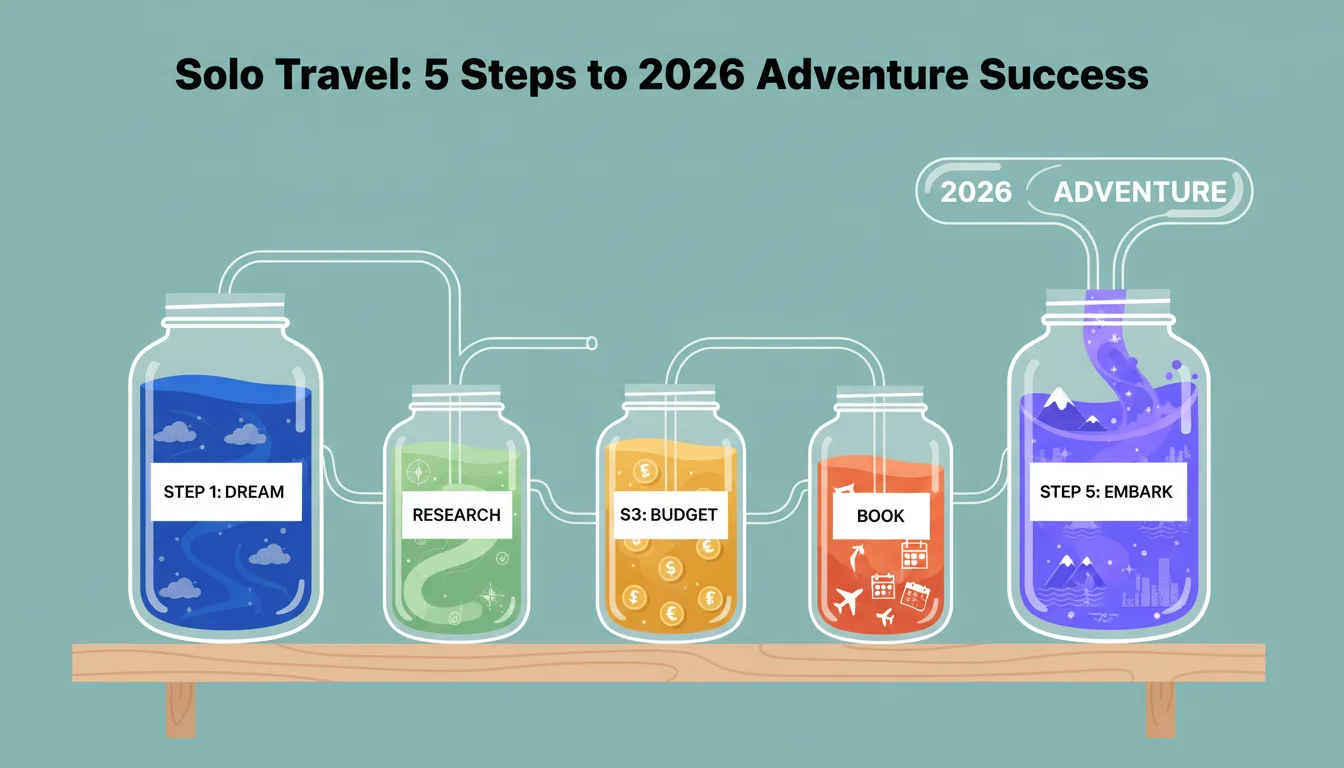
Getting to a place where you can have a calm, rewarding solo trip, especially one focused on self-discovery, requires a methodical plan. You need to handle the logistics and get your head in the right space. I recommend a four-week timeline at minimum. It gives you breathing room for research, booking, and sorting out backup plans.
Beach-ready, wedding-ready, anytime-ready skin
Look and feel your best for every occasion. Find a waxing studio near you and book ahead.
Find a Studio Near You →Phase 1: Figure Out Your “Why” (Weeks 4-3 Before Departure)
This is where you think about what you actually want to get out of the trip. Are you looking to dive deep into history by exploring the ruins in Rome, or do you need a nature reset hiking through Utah’s national parks? Your main goal will point you to the right destination. I tell people to make a “vision board” or just a simple doc with their top three goals for the trip. If you want to disconnect, for example, you should be looking at places with spotty reception or that offer silent retreats. Once you have a goal, you can research destinations, checking things like visa rules, weather for when you want to go, and safety info from sources like the U.S. Department of State’s travel advisories (travel.state.gov). Now is also the time to draft a budget. Estimate your daily costs for a room, food, and transport, then add a 20% buffer for surprises. It’s your “just in case” fund.
Phase 2: Lock Down Logistics (Weeks 3-2 Before Departure)
Okay, you’ve got a destination and a purpose. Now book the big stuff. Get your flights and your main accommodation sorted. As a solo traveler, I always push for hotels or guesthouses with a 24-hour front desk and solid security reviews, at least for your first couple of nights in a new place. You can filter for these things on sites like Booking.com (Booking.com) or Agoda (Agoda.com). The second you book those, buy travel insurance from a site like (travelinsurance.com). It’s absolutely not optional. Then, dig into local transport. Are you taking the train, using ride-sharing, or renting a car? Download the apps you’ll need and get a feel for them. This is also when you sort out your phone plan. An eSIM from a service like Airalo (Airalo.com) is a great option because you can set it up beforehand and have data the second you land.
Phase 3: Safety, Packing, and Headspace (Week 2-1 Before Departure)
Time to focus on your safety net and packing light. Make digital and physical copies of your passport, visa, insurance, and booking confirmations. Give a set to someone you trust back home. Look up the local emergency numbers (they’re not always 911) and find the address of your country’s embassy. For personal safety, a simple personal alarm can bring peace of mind, and learning a few key phrases like “Where is the bathroom?” or “I need help” in the local language is invaluable. Packing for two weeks alone is all about versatility. Put together a capsule wardrobe where everything matches. Use packing cubes, they’re a lifesaver for organization and space. Always, always pack a change of clothes in your carry-on in case your checked bag goes on its own little vacation. Mentally, you need to accept that things will go wrong. A train will be late or a museum will be randomly closed. Those are just chances for a spontaneous detour, not trip-ruiners.
Phase 4: Final Checks and Go Time (Final Week)
During the last few days, just run through your checklist. Confirm all your bookings one last time. Double-check your flight time. Call your bank and credit card companies to let them know you’ll be traveling so they don’t freeze your accounts. Download offline maps of your area on an app like Google Maps or Maps.me (Maps.me). Charge everything, phone, battery packs, headphones. Get to the airport with more than enough time. The travelers who show up calm and organized are the ones who actually enjoy those first few hours of a trip instead of spending them stressed out.
The Payoff: Why This Prep Work Is Worth It
When you actually follow a plan like this, the difference in your trip is huge. The biggest thing is that your stress level plummets. Instead of landing in a foreign country and immediately having to solve five problems, you can transition smoothly and start enjoying yourself from day one. This builds real confidence. When you successfully navigate a foreign airport by yourself, find your hotel without a hitch, and know you have a backup plan for communication, you build a kind of self-reliance that sticks with you long after you get home.
Good planning also saves you money. By booking things ahead of time, you avoid the crazy last-minute price gouging. Having a clear budget with that 20% cushion means you don’t have to sweat every purchase or worry about running out of cash. It frees you up to say yes to things like a spontaneous cooking class you stumble upon. Based on my work with clients, I’d say travelers who give themselves that four-week prep window report being about 30% happier with their trips than people who wing it. They feel more present and open, and they connect more with the places they go. They get the self-discovery they were looking for.
In the end, preparing for a solo trip is about building a strong framework so you can confidently handle whatever comes your way. It’s what turns potential disasters into minor, sometimes even funny, detours. This proactive work is what makes a two-week solo trip a genuine journey of exploration and growth, and not just a two-week stress test.
How far in advance should I book flights and accommodation for a two-week solo trip?
For the best prices and options, especially if you’re traveling during a busy season, try to book flights and your main places to stay at least two to three months in advance. If you’re going somewhere very popular or for a specific festival, booking six months out isn’t a bad idea.
What are the most important safety precautions for a solo female traveler?
Pick accommodation with good security (like a 24-hour front desk), and always share your full itinerary with someone at home. Try to avoid walking alone late at night in areas you don’t know, and always trust your gut if a situation feels off. Carrying a personal safety alarm and learning a few safety phrases in the local language are also smart moves.
How can I manage loneliness during my solo travels?
You can fight off loneliness by staying in more social spots (like hostels that offer private rooms), joining a day tour or a local workshop, or using an app like Meetup (Meetup.com) to find groups with similar interests. Don’t be afraid to strike up a conversation with a shopkeeper or another traveler. It’s totally normal to want some human connection even when you’re embracing solitude.
What’s the best way to handle money while traveling alone internationally?
Use a mix of payment types: one credit card, a backup debit card from a different bank, and a bit of local cash for small purchases. Tell your banks about your travel dates before you leave. And don’t keep all your money and cards in the same wallet, split them up between your pocket, your bag, and maybe a hidden spot in your luggage.
Should I plan every day of my two-week solo trip, or leave room for spontaneity?
You need a balance. Definitely plan your big-ticket items, flights, the first hotel, and any tours you absolutely can’t miss. But try to leave about 30-40% of your schedule open. That empty space is where the magic happens: you can act on a local’s recommendation, change your plans if you’re tired, or just wander. That flexibility is what solo travel is all about.


