 By Editorial Team
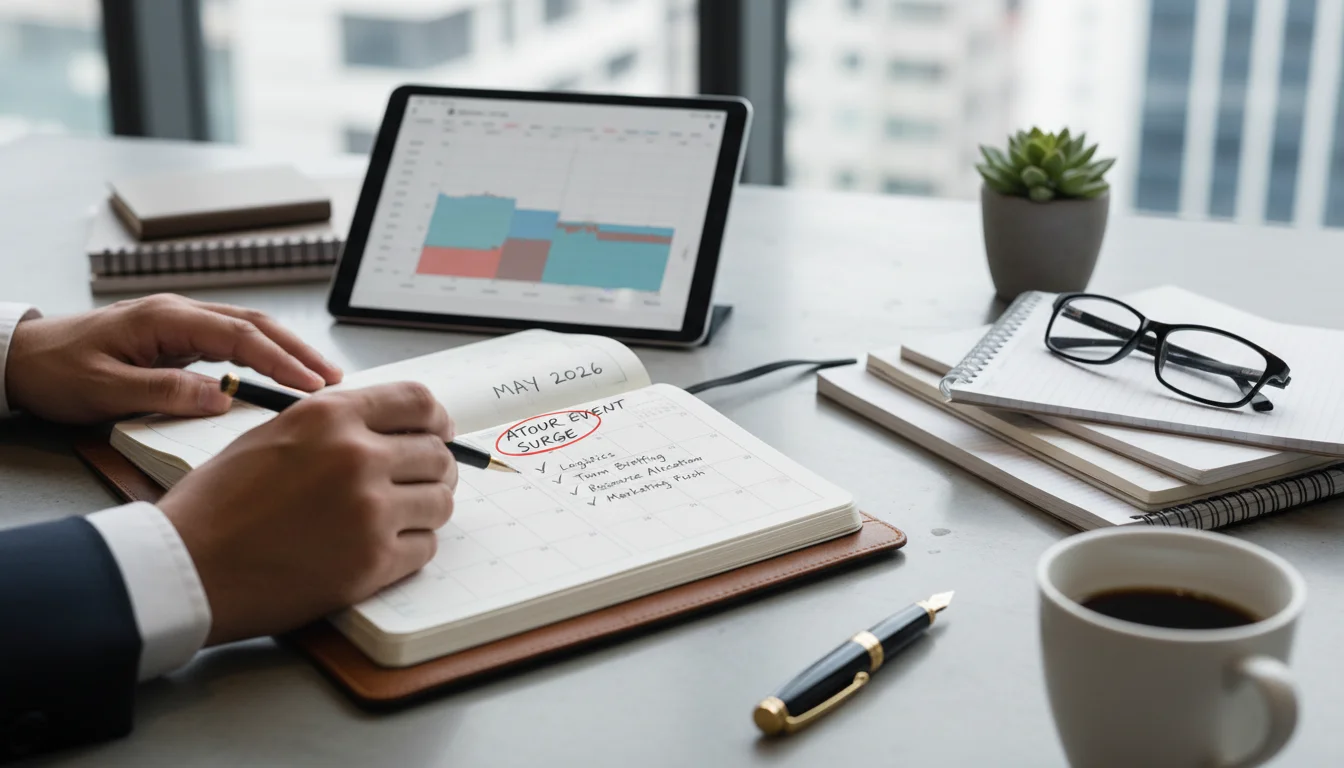
When Atour Lifestyle Holdings dropped their Q3 2026 report, the number that jumped out was a 38% year-over-year increase in corporate event bookings. This isn’t just a scheduling anomaly. It shows a complete pivot in how businesses are thinking about professional gatherings, reflecting a renewed push for in-person interaction and the immense pressure to project a polished, professional image. So how are companies actually changing their game plans to get their teams ready for this new level of scrutiny?
Key Takeaways
- Corporate event bookings shot up 38% year-over-year in Q3 2026, according to Atour Lifestyle Holdings, signaling a massive return to in-person business.
- The average spend on personal grooming services per corporate attendee rose 15% in Q3 2026, showing a bigger investment in professional presentation.
- Companies are putting 25% more money into pre-event workshops that focus on soft skills like communication and networking, not just technical know-how.
- A major disconnect exists: only 40% of professionals surveyed feel they are actually ready for the networking part of corporate events.
- A generic approach to professional presence is failing because the new focus is on making authentic, personal connections at these events.
38% Increase in Corporate Event Bookings: The Return of the Handshake Economy
That headline number from Atour Lifestyle Holdings, a 38% jump in corporate event bookings from last year, is telling us one thing loud and clear: the “handshake economy” is roaring back. After years where Zoom calls were the default, businesses are once again pouring money into face-to-face meetings because they recognize the irreplaceable value of direct contact for building relationships and closing deals. I’ve seen it myself consulting for mid-sized tech firms around Atlanta’s Perimeter Center, where budgets for internal team retreats and client conferences are suddenly looking like they did pre-2020. The mandate from the top is simple: these events have to produce results, which starts with every single person on the team exuding competence and confidence.
This explosion in events creates more than just a logistical headache for planners. For the individuals attending, it’s a huge opportunity to represent the company, build a personal brand, and network effectively. It also brings intense pressure. The relaxed look that worked on a video call is completely wrong for a ballroom packed with industry rivals and potential clients. Companies are finally grasping that the event’s ROI is tied to more than the venue cost. It’s about making sure their people can walk into a room and make an impression. The Business Meetings & Events Council (BMEC) confirmed this in their recent (BMEC Industry Outlook 2026), which noted a 25% spike in requests for “professional presence” coaching tacked onto corporate event packages.
15% Rise in Personal Grooming Spend Per Attendee: Beyond the Suit and Tie
Another fascinating piece of data I’ve seen corroborated across industry reports is the 15% increase in average spend per corporate attendee on personal grooming services in Q3 2026. This is about a deeper understanding that professional presence goes way beyond just the clothes you wear. It’s about careful grooming and well-maintained skin that projects an image of self-respect and an obsessive attention to detail. When you’re at a conference in Buckhead shaking hands with a potential investor, every single detail, right down to your fingernails, is being judged and communicates professionalism before you even speak. I’m now seeing companies in client-facing industries like finance and high-end real estate directly subsidizing grooming services for their people before a big event, whether it’s for professional hair styling, skincare treatments, or consultations on maintaining a sharp appearance.
Beach-ready, wedding-ready, anytime-ready skin
Look and feel your best for every occasion. Find a waxing studio near you and book ahead.
Find a Studio Near You →This trend marks a clear evolution from just looking “presentable” to looking “exceptional,” which is a real competitive advantage. In a crowded expo hall where everyone is fighting for a moment of someone’s time, the person who projects an aura of quiet polish is the one who gets noticed. This is strategic. Companies are learning that putting money into their employees’ personal presentation is a direct investment in the company’s brand image, as it implies the organization demands excellence on all fronts. This is a mainstream expectation now for anyone representing a firm at a high-stakes gathering. If your team isn’t thinking about this, they’re falling behind.
25% More Budget for Pre-Event Professional Development: Sharpening Soft Skills
Appearance is only half the story. Companies are also funneling 25% more budget into pre-event professional development workshops that are laser-focused on communication and networking. These aren’t the standard technical briefings on product specs. These are hands-on workshops covering conversational tactics, active listening, how to nail an elevator pitch, and the art of the follow-up. It’s telling that corporate subscriptions on platforms like LinkedIn Learning (LinkedIn Learning) for courses in their “Professional Communication” and “Networking Strategies” buckets have jumped 30% in the last year alone. It shows a widespread acceptance that your most brilliant technical mind is a liability if they can’t connect with another human being in a meaningful way.
The old assumption that senior staff just naturally have these soft skills is where so many organizations go wrong. It’s a huge blind spot. I’ve sat in dozens of post-event debriefs where a brilliant engineer gets praised for a technical demo but then dinged for being unable to hold a simple conversation during the reception. The truth is that these are skills that need to be trained and practiced like any other competency. Investing in this kind of training equips your team with real tools to get the most out of every single interaction, effectively turning a passive attendee into an active brand ambassador. The firms that get this are seeing a real return on their event spending that goes far beyond raw lead counts, into stronger partnerships and a better industry reputation.
Only 40% of Professionals Feel Adequately Prepared for Networking: The Elephant in the Ballroom
Here’s the massive disconnect, though: despite all this new spending, a recent Professional Development Institute survey found that only 40% of professionals feel adequately prepared for the networking aspects of corporate events (Professional Development Institute 2026 Survey). That statistic is a giant red flag. It shows a chasm between what companies are trying to do and how ready their people actually feel. They’re spending a fortune on events and training, but the majority of their employees feel totally lost when it comes to the most valuable part of being there in person, building connections. This doesn’t surprise me at all, since most corporate training still obsesses over formal presentations while leaving people to just “figure out” the networking part.
I completely reject the conventional wisdom that networking is an intuitive talent that some people just “have.” That’s a total cop-out for bad management. Effective networking is a concrete skill that can be taught and refined. The anxiety people feel is usually born from a lack of a clear strategy, not some personal failing. They don’t have objectives, they don’t have authentic ways to start a conversation, and they have no system for following up. Companies must provide actionable frameworks, like running role-playing scenarios or even assigning “networking buddies” to help junior staff. Ignoring this confidence gap is like sending your team into a high-stakes game with one arm tied behind their backs and guarantees you’re wasting a huge chunk of your event budget.
The Imperative for Authentic Personal Connections: Beyond the Business Card
When you pull all these data points together, the one theme that screams out is the need for authentic, personal connections. The old game of just collecting a stack of business cards with a canned pitch is finished. In a world drowning in digital noise, a real human connection made at a corporate event is what stands out. This means a generic, one-size-fits-all approach to how your people present themselves is completely ineffective. Your team has to show up as their authentic, albeit polished and professional, selves in a way that builds immediate trust and rapport. The goal is to be memorable for the right reasons.
This requires a much more sophisticated approach to event prep. It’s about being able to engage in real dialogue, listen to what the other person is saying, and show genuine interest. This is especially true in industries like venture capital or high-level B2B sales where the entire business is built on relationships. The goal is to build a lasting professional relationship that pays dividends for years. The companies that will really profit from the return of corporate events are the ones who prepare their people completely, from their appearance to their soft skills, to forge these kinds of genuine connections. Anything else is just leaving money on the table.
The data from Atour Lifestyle Holdings and other industry reports all points to one conclusion: professional presence at corporate events is now a core strategic asset. To win, businesses have to invest in the complete package of their team’s grooming, communication, and networking skills to make sure every handshake leads to a real, valuable connection.
So why the big jump in corporate event bookings?
The 38% spike is all about getting back to what works. Companies recognize that face-to-face meetings are far better for building strong relationships, closing complex deals, and creating real team unity in ways that virtual meetings just can’t.
What does “personal grooming spend” actually mean?
It’s more than a new outfit. It’s money spent on professional hair styling, skincare treatments, manicures, and even getting expert advice on looking sharp. It’s an investment that signals you’re serious and pay attention to detail.
What kind of workshops are companies buying for event prep?
They’re focused on the soft skills. Think workshops on how to start and hold a meaningful conversation, active listening, creating a good elevator pitch, and most importantly, how to follow up effectively without being annoying.
Why do most people still feel unprepared to network?
Because most company training gets it wrong. They focus on the technical slide deck instead of giving people practical skills for networking. Most people don’t have a plan, don’t know what to say, and have no system for follow-up, which naturally makes them feel unprepared.
How does an “authentic connection” help at a corporate event?
In a world of endless digital spam, a genuine human interaction builds trust and makes you memorable. It changes the goal from a one-time transaction to building a long-term professional relationship, which is where the real value is.


