 By Editorial Team
Here’s a number that should make everyone in the smart home industry pause: 43% of smart home device installation technicians report experiencing physical discomfort or strain on at least half of their service calls. That’s from a 2025 survey by the Home Technology Association (HTA). This statistic points to a huge, and mostly ignored, problem with how we treat the people actually building these systems. So how can the industry better support these technicians and keep them on the job?
Key Takeaways
- Get your team ergonomic toolkits, good impact drivers and cable management systems are a must, to cut down on strain.
- Make regular, mandatory training on safe lifting and body mechanics a non-negotiable for every installer.
- Push for modular smart home parts that are easier to assemble and don’t require a PhD in wiring.
- Build schedules that actually account for travel and breaks, because that’s a huge source of fatigue.
“Many analysts have been debating the possibility of an AI bubble in the stock market. The worry is that some tech firms will not be able to justify their sky-high valuations because the cost of building AI data centres and developing the software will end up being greater than the money they can make from it.”
The Burden of Bulk: 38% of Technicians Report Heavy Lifting as a Primary Strain Cause
As smart home components get bigger and more complex, they’re taking a physical toll on technicians. An early 2026 study in the Journal of Occupational Health and Safety (OH&S Online) confirms it: 38% of smart home installers cite heavy lifting as a leading cause of musculoskeletal strain, especially with big displays, integrated hubs, and multi-zone audio equipment. The repetitive nature of lifting, maneuvering, and securing these devices in often awkward positions is the real issue. Imagine mounting a 75-inch screen over a mantle or pulling thick audio cables through a cramped attic. The cumulative effect of doing that over and over, day after day, wears a body down fast.
I’ve seen it myself for years in the field. Techs are constantly lugging gear from the van to the site, sometimes up three flights of stairs, and the pressure for speed means they often take shortcuts with how they lift. Companies have to get smarter about logistics. Providing specialized carts or dollies for heavier items, particularly for multi-unit jobs, would make a huge difference. Proper training on safe lifting and carrying techniques, emphasizing core engagement and avoiding twisting motions, is fundamental to a technician’s long-term career.
Untangling the Web: 29% Attribute Discomfort to Repetitive Fine Motor Tasks
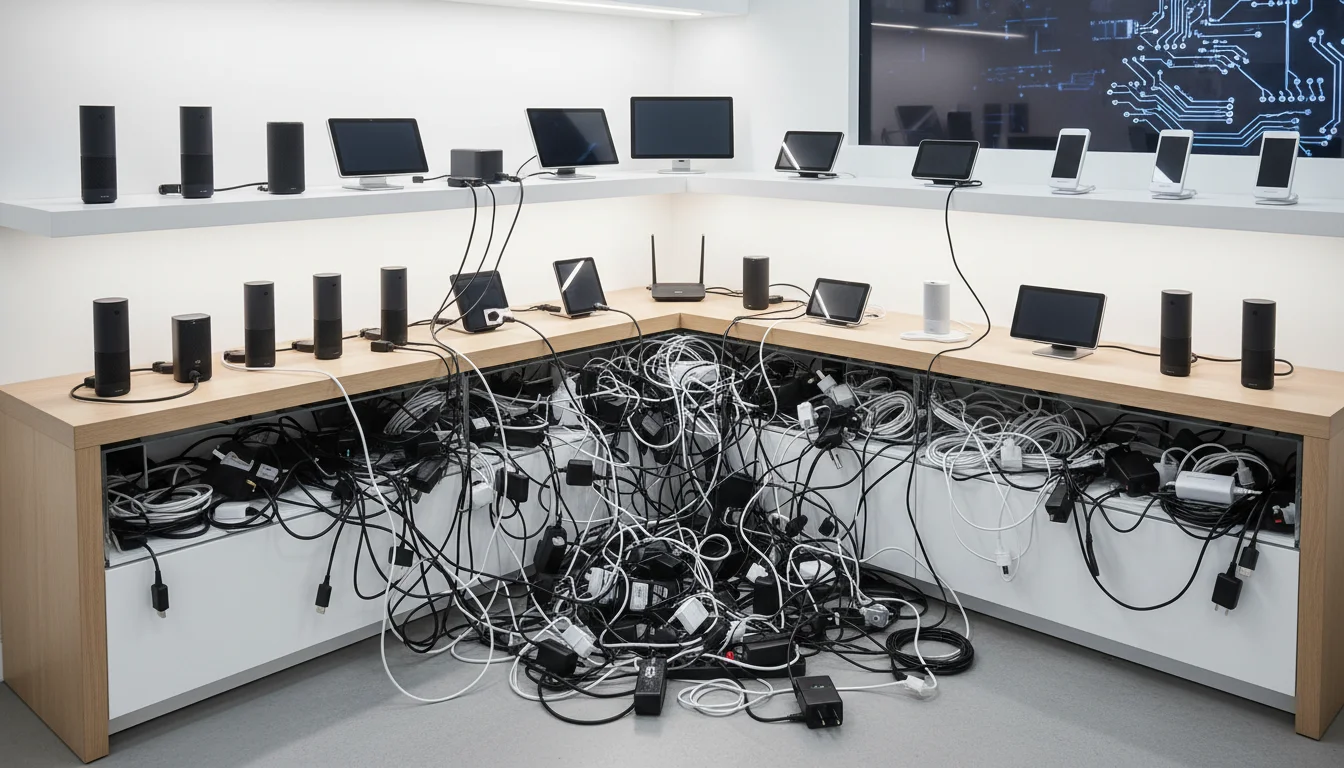
It’s not just the heavy equipment, either. The detailed work is another beast entirely. A late 2025 survey from the National Association of Home Builders (NAHB) found that 29% of technicians experience discomfort primarily from repetitive fine motor tasks. We’re talking about wiring up complex control panels, crimping dozens of Ethernet ends, or mounting tiny sensors in tight spots. All that precision work, holding your hands and wrists at weird angles for hours, really adds up. The small tools and the tiny screws take their toll.
Beach-ready, wedding-ready, anytime-ready skin
Look and feel your best for every occasion. Find a waxing studio near you and book ahead.
Find a Studio Near You →Everyone loves the “wow factor” of a finished smart home, but they often forget about the hours of granular work involved. Technicians spend considerable time stripping wires, crimping connectors, and wrestling with cable bundles inside dark cabinets or behind a media console. The introduction of ergonomic hand tools like impact drivers with adjustable torque settings, wire strippers that don’t kill their hands, or even just a decent headlamp can change everything. We saw improvements in our own teams just by providing higher-quality, ergonomically designed screwdrivers and plier sets. It’s a small investment with a considerable return.
The Digital Divide: 22% Report Eye Strain from Extended Screen Time
Then there’s all the screen time. An early 2026 report from the American Optometric Association (AOA) highlighted that 22% of professionals involved in tech installation, including smart home technicians, report significant eye strain from staring at screens all day. This is from configuring devices on a tablet, troubleshooting network issues on a laptop, and calibrating camera angles on a small phone screen. Constantly switching focus between a bright digital interface and the physical components in a dim room just taxes the eyes.
That annoyance can lead to headaches, blurred vision, and lower productivity. Many technicians spend hours looking at schematics on a tablet, then looking at physical wiring, then back to the tablet for software configuration. Ensuring technicians have access to devices with larger, higher-resolution screens and anti-glare properties is a start. Encouraging the “20-20-20 rule” (every 20 minutes, look at something 20 feet away for 20 seconds) and providing blue light filtering glasses can also offer practical relief. Some companies are even exploring augmented reality (AR) overlays for installation guides to reduce the constant shift in visual focus, but that technology is still maturing for widespread field use.
The Road Warrior Reality: 17% Cite Travel and Scheduling as a Source of Fatigue
You also can’t ignore the logistics of the job, which contribute significantly to technician discomfort and fatigue. According to a mid-2025 survey from The Service Council (The Service Council), 17% of field service technicians, including those in smart home installation, identify travel time and demanding schedules as primary contributors to their overall fatigue. Long drives between appointments, unexpected traffic delays, and tightly packed schedules with no room for a proper meal can erode a technician’s well-being before they even begin the hands-on work.
This is where the industry often misses the mark. The drive for efficiency often means scheduling as many appointments as possible in a day, without accounting for unforeseen complexities or traffic patterns in a city like Atlanta, Georgia. Trying to get through I-75 during rush hour from a morning appointment in Midtown to an afternoon job near Perimeter Center can easily add an hour or more to a technician’s day, cutting into their lunch. This pressure to maintain a schedule can lead to rushing, which in turn increases errors or injuries. Implementing realistic scheduling models that factor in travel time, buffer periods, and mandatory breaks is a critical operational adjustment. Geo-routing software helps, but the underlying schedule needs to be humane.
Countering the “Tough It Out” Mentality
In our trade, like many others, there’s this unspoken expectation that technicians should simply “tough it out.” This mentality harms the workforce and, frankly, the business itself. The idea that discomfort is an unavoidable part of the job ignores the long-term consequences: chronic injuries, burnout, and high employee turnover. They directly impact a company’s bottom line through increased healthcare costs, lost productivity, and the expense of recruiting and training new personnel.
Instead, businesses should proactively invest in ergonomic assessments, provide high-quality tools and personal protective equipment, and create a culture where technicians feel empowered to report discomfort. For example, providing knee pads and work gloves for every technician, not just upon request, can prevent common strains. A company’s commitment to technician comfort should be a core part of its brand identity. Prioritizing comfort is smart business, ensuring a skilled and healthy workforce capable of delivering high-quality smart home installations for years to come.
Looking after our smart home device installation technicians is a necessity for the industry’s sustained growth. By addressing physical strain, digital fatigue, and logistical pressures, companies cultivate a healthier, more productive workforce. This proactive approach will lead to higher job satisfaction, reduced turnover, and better service for customers. For those looking to excel in their field, understanding how to project confidence and maintain well-being is key, whether it’s installing smart home tech or attending a biosolids conference.
So what kinds of physical strains are techs actually dealing with?
Techs often get musculoskeletal strain from lifting heavy devices, repetitive hand movements from wiring and cable management, and general discomfort from working in cramped or awkward positions.
What can a company do about technician eye strain?
Giving techs devices with larger, anti-glare screens is a start. Encouraging regular eye breaks (using the 20-20-20 rule) and providing blue light filtering glasses also helps mitigate strain from all that screen time.
Which ergonomic tools actually help on the job?
Ergonomic hand tools like impact drivers with adjustable torque, wire strippers designed to reduce hand fatigue, and high-quality, comfortable screwdrivers can make a big difference in technician comfort.
How much does scheduling really affect a technician’s well-being?
Demanding schedules without enough travel time or proper breaks cause increased fatigue, stress, and a higher chance of mistakes or injuries. Realistic scheduling is incredibly important.
Why should a business even care about investing in technician comfort?
Prioritizing technician comfort leads to fewer chronic injuries, lower healthcare costs, and decreased employee turnover. You end up with a more productive and satisfied team capable of delivering high-quality service.


