 By Editorial Team
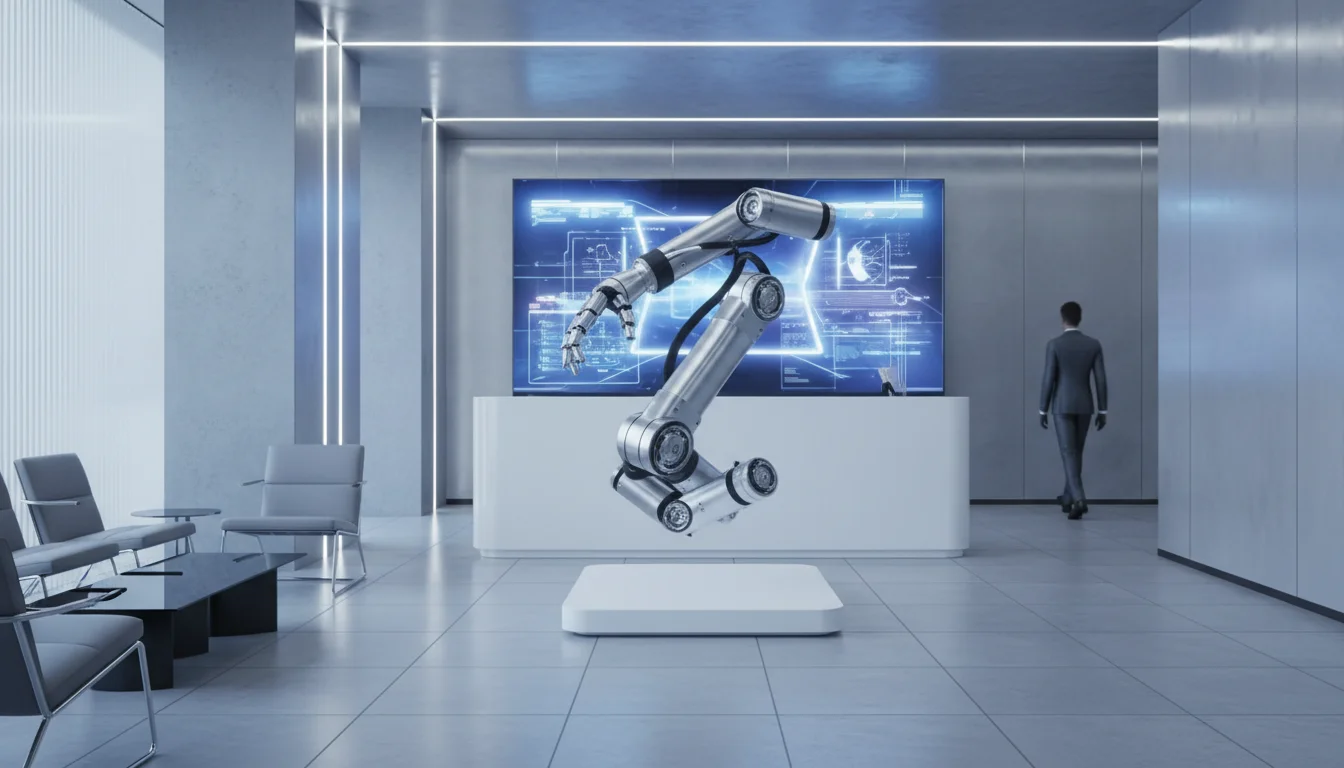
With the global robotics market expected to hit over $210 billion by 2026, it’s clear things are moving fast. A good robotics exhibition is your best window into this future, showing off innovations that create entirely new ways of interacting with technology. From factory lines that run themselves to smart personal assistants, these events are where engineering, AI, and design all collide, constantly redefining what machines can do. When you attend a premier tech event focused on robotics, you see the unexpected applications of future tech firsthand, and it completely changes how you see automation and human-machine teams. Surprising applications of robotics are already on the horizon, getting ready to reshape daily life.
Key Takeaways
- Robots are getting smarter, using AI for real-time decision-making that goes far beyond their initial programming.
- You’ll see collaborative robots (cobots) everywhere on the exhibition floor, built to work safely next to people and boost productivity in places like hospitals and warehouses.
- Expect to see some incredible next-gen robotic dexterity, including manipulators that can handle super delicate objects or perform complex assembly.
- A big topic of conversation will be the ethics and regulations around autonomous systems, as the industry grapples with how to build this stuff responsibly.
- New fields like soft robotics and bio-inspired design are letting robots work in hazardous or tight spots that were impossible before.
The Evolution of Robotic Dexterity and Precision
Robotics has grown up. We’re a long way from the clunky, repetitive arms of early factories. Today’s robots have a level of dexterity and precision that can easily beat a human in certain tasks, especially highly detailed or repetitive ones. This leap forward is thanks to better sensors, smarter kinematic designs, and very sophisticated control algorithms. For instance, at any major robotics exhibition, you’ll see the latest robotic manipulators doing micro-assembly of electronics with tolerances measured in microns. Just look at the work from companies like Boston Dynamics, whose Atlas robot has stunning dynamic balance, or ABB Robotics with its continuously refined YuMi cobot for small-parts assembly. These machines are faster, more adaptable, and learn from their surroundings to adjust movements on the fly.
The integration of advanced haptic feedback systems is one of the most interesting parts of this progress. Engineers are building robotic hands that don’t just grab things but can feel texture, temperature, and slight changes in shape. This is what allows for extremely delicate handling which is critical for microsurgery or working with fragile biological samples. At the recent International Robotics and Automation Show in Tokyo, I saw a demo where a robotic arm successfully threaded a needle, an act that demands incredible visual coordination and fine motor control. This kind of precision makes it possible to automate work we once thought was for humans only, from weaving textiles to placing optical fibers. The benefits for manufacturing, medicine, and research are obvious: better efficiency and fewer human errors.
And then there’s soft robotics, which is completely changing our ideas about how a robot should interact with the world. Unlike traditional rigid robots, these are made from compliant materials that let them bend, squeeze through narrow gaps, and safely handle people or delicate items. Think about a silicone gripper that can pick a ripe tomato without crushing it, or an endoscopic bot that navigates inside the human body without causing damage. You’ll see these innovations all over a major tech event covering future tech. They show a clear shift away from brute-force automation toward more adaptive, nuanced machine interaction. This work pulls from materials science, mechanical engineering, and control theory to build machines that are strong, gentle, and versatile.
AI and Machine Learning: The Brains Behind the Bots
A robot without intelligence is just a fancy tool. It’s the combination with Artificial Intelligence (AI) and Machine Learning (ML) that makes them truly autonomous and adaptable. Any modern robotics exhibition makes it clear that AI is the central nervous system for these machines, giving them the ability to perceive, reason, and act in messy, real-world situations. Deep learning algorithms, for example, give robots advanced vision to identify objects, figure out their properties, and even guess what a person is about to do. You see this a lot in logistics and warehousing, where AI-equipped robots can sort packages of all shapes and sizes, reorganize storage on the fly, and navigate a busy floor without needing a pre-planned route.
Reinforcement learning is another huge piece of the puzzle. This is a type of machine learning where an AI agent figures out what to do by trial and error, aiming to get the biggest “reward.” This is how robots are learning to walk on uneven ground or pick up objects they’ve never seen before, all by practicing in millions of simulations instead of being programmed for every single possibility. Companies like Google’s DeepMind have shown how AI agents can teach robotic arms to stack blocks with amazing dexterity, just by practicing and watching. This learning ability drastically cuts down the time and money it takes to get robots working in new roles, making automation more flexible for everyone.
AI is also the key to human-robot collaboration. Collaborative robots (cobots), which are meant to work right next to people, depend on AI for safety and efficiency. Their AI-powered sensors can spot a person and adjust their speed or path to prevent a collision. Plus, machine learning lets a cobot learn a new task just by watching a human do it, so you don’t need to be a programmer to teach them. This kind of partnership is a huge theme at any good robotics exhibition, showing a future where robots help humans do their jobs better. The benefits are pretty clear: you get more done, people have less physical strain from repetitive work, and you can tackle complex jobs that need both human creativity and a robot’s precision.
Of course, the ethics of increasingly smart robots is a major topic. As they become more autonomous, tough questions pop up about accountability, algorithmic bias, and what this all means for jobs. Who’s responsible if an autonomous system messes up? Industry leaders and researchers are already working on ethical guidelines and regulations to make sure this tech is rolled out responsibly. You’ll see this conversation happen on expert panels and in keynotes at major tech events, because everyone understands that progress has to be balanced with what’s good for society. We have to make sure the intelligent machines we build operate within a framework of human values.
Get smooth and event-ready
Look and feel your best for every occasion. Find a waxing studio near you and book ahead.
Find a Studio Near You →Robotics in Everyday Life: Beyond the Factory Floor
Industrial robots have been in factories for decades, but the next wave is moving right into our daily lives, changing everything from healthcare to our homes. A robotics exhibition gives you a solid preview of this future, with innovations that promise smarter homes, more personalized healthcare, and more efficient cities. For example, look at the spread of autonomous delivery robots. Companies like Starship Technologies are already using small, wheeled bots to navigate sidewalks and deliver groceries and packages. This cuts down on traffic and delivery costs, solving the “last-mile” logistics problem. It’s a perfect example of future tech being built to fix everyday headaches.
The impact in healthcare is especially powerful. Surgical robots like the da Vinci system have completely changed minimally invasive surgery, letting doctors perform complex operations with more precision and shorter recovery times for patients. Outside the operating room, you have robotic exoskeletons helping people with mobility issues walk again and providing rehab support. On top of that, robotic companions are being developed to help the elderly with daily tasks, medication reminders, and social interaction. These applications show a clear move away from purely industrial work toward a focus on human well-being, a trend you’ll see all over any tech event in the robotics field.
Even our homes are getting filled with robots. It’s gone way beyond vacuum cleaners. We’re now seeing robotic kitchen arms that can cook a meal, smart lawnmowers that tend the garden by themselves, and security bots that patrol your property. These gadgets use AI, sensors, and an internet connection to make life more convenient. The big challenge is getting all these different systems to talk to each other and work together smoothly in a single home. That’s why standardization and open-source platforms are so important, it’s about creating an intelligent, responsive home, not just a collection of cool gadgets.
The Future of Human-Robot Collaboration and Ethics
The conversation about robotics has changed. It’s less about jobs disappearing and more about human-robot teamwork. The most exciting applications of future tech involve people and robots working together, each playing to their strengths. Robotics exhibitions are full of these demos, showing a person’s creativity combined with a robot’s endurance. In a modern factory, a cobot might handle the heavy lifting while a person focuses on quality control or custom work. This approach boosts productivity and makes the workplace safer and more satisfying.
But as robots become a normal part of life, the ethical questions get louder. Accountability is a big one. If a self-driving car crashes, who’s at fault, the owner, the manufacturer, the software engineer? These aren’t easy questions, and they demand solid legal and ethical answers. Groups like the Institute of Electrical and Electronics Engineers (IEEE) are already creating ethical standards for autonomous systems that focus on transparency and human oversight. It’s a conversation that definitely takes center stage at any tech event about the future of robotics.
Data privacy is another huge ethical issue. Robots in our homes or in public spaces are collecting tons of data. We have to make sure that data is stored and used responsibly. That means strong cybersecurity is non-negotiable to stop people from misusing that information. We also have to be very careful about bias in AI algorithms, which can accidentally lead to unfair or discriminatory results. The only way to fight that’s for developers to be diligent about building and training their AI models on diverse, representative datasets.
The future of robotics is fundamentally about shaping a society where these powerful tools actually help people. The discussions you’ll hear at a robotics exhibition go way beyond tech specs. They get into the social impact, bringing engineers, ethicists, and the public into the same room. Ignoring these ethical dimensions would be a mistake. Technical brilliance alone cannot guarantee a positive future.
Working through the Robotics Exhibition: Tips for Maximizing Your Experience
Walking into a big robotics exhibition or tech event can be overwhelming. There’s just so much to see. If you want to get the most out of it, you need a plan. First, prioritize. Get the exhibitor list and event schedule ahead of time and circle the companies, labs, or speakers that matter to you, whether you’re interested in industrial automation, medical bots, or something else. Most events have a mobile app with a map that helps you navigate the floor. You can’t see it all, so go deep on what’s important to you.
Second, talk to people. Don’t just stand back and watch. Go up and ask the exhibitors questions. These are usually the engineers who built the damn things, so they can give you insights you won’t get anywhere else. Ask about specific use cases, the AI models, or the biggest challenges they ran into. I always find the most valuable information comes from these direct conversations. You might learn about a specific sensor they used or a control algorithm detail that’s the secret to the whole operation.
Third, look past the flashy stuff. It’s cool to see a robot do a backflip, but you need to ask yourself: what problem is this actually solving? How scalable is it? What does the business case look like? Often, the most important tech isn’t the most spectacular. It might be a simple robotic arm that can reliably pick and place tiny parts 24/7. That’s a lot more impactful in the real world than a humanoid doing acrobatics. Think about long-term viability.
Finally, network. These exhibitions are where everyone in the industry gathers, leaders, investors, engineers, and fans. Hit the networking events, go to meet-ups, or just strike up a conversation while waiting for a demo. You never know who you’ll meet. Talking with people from different parts of the industry can give you a whole new perspective. For a lot of attendees, the connections they make are just as valuable as the tech they see. These events are about participating in the ongoing dialogue that shapes what’s next.
A robotics exhibition is the place where innovation, education, and collaboration all happen at once, giving you a real look into a future where machines will be part of almost everything we do. By focusing on real applications, talking to experts, and thinking about the ethics, you can walk away with a clear understanding of where this is all headed. The main takeaway is simple: if you want to be ready for the opportunities and challenges of tomorrow’s automated world, you have to understand where robotics is today. For gaming meetups or any other event, thinking about how this tech improves personal efficiency is also a useful exercise.
What are the primary benefits of attending a robotics exhibition?
You get to see brand-new technologies up close and in person which is way better than reading about them. It’s also your best chance to network with the people actually building this tech and hear what they think is coming next. You can get hands-on with new robots and really understand what they can do.
What types of robots are typically showcased at these tech events?
You’ll see a huge range. There are always industrial robots for manufacturing, but also collaborative robots (cobots) for working with people, service bots for logistics and hospitals, autonomous cars and drones, humanoid robots, and highly specialized bots for things like exploration or disaster recovery. The variety shows you just how widespread robotics is becoming.
How is Artificial Intelligence impacting the field of robotics?
AI is what gives robots a brain. It lets them see and understand the world around them, learn new skills from experience, and make their own decisions. With AI, a robot can adapt to a messy environment instead of just repeating a programmed task. It’s what’s making them so much more useful and flexible.
Are robotics exhibitions only for industry professionals?
No, not at all. While they’re definitely a hub for professionals and investors, many are open to students, teachers, and anyone who’s just curious about technology. They usually have educational sessions and interactive demos that are great for a general audience wanting to see what future tech looks like.
What ethical considerations are discussed at robotics exhibitions?
The big ethical topics are usually accountability (who’s to blame when a robot messes up?), data privacy, job displacement, and bias in algorithms. There’s a lot of talk about how to develop and use AI-powered robots responsibly so that the technology actually benefits society.


