 By Editorial Team
Key Takeaways
- Use professional platforms like Zoom Webinars or Microsoft Teams Live Events for offshore wind webinars. They’re built for stability and have the interactive tools you need.
- Test your audio and video, check for a solid internet connection, and shut the door. A controlled environment is key to actually learning something.
- Get involved in the FAQ session. Think up sharp, relevant questions and use the platform’s Q&A function, not the general chat.
- The webinar isn’t over when it ends. Go back through the materials and reach out to presenters if you have more questions or want to connect.
- Tech problems happen. Have a backup plan ready, like using your phone for audio or having a second laptop on standby, so you don’t miss anything.
Getting real value from an offshore wind environmental webinar takes more than just showing up. You need to prep, engage, and follow through. These aren’t just presentations. They’re becoming the main way we all keep up with regulatory shifts, new tech, and ecological data in the offshore wind sector. So how do you make sure you’re an informed participant who walks away with real insights, especially from the critical FAQ session?
1. Pre-Webinar Registration and Technical Setup
A good webinar experience starts with a solid technical setup. First, pay attention to the registration. Most serious webinars on a topic as complex as offshore wind will use a dedicated platform like Zoom Webinars or Microsoft Teams Live Events. They’re built to handle big crowds and offer features like Q&A moderation and polling that a simple meeting tool doesn’t.
After you register, you’ll get a confirmation email with your unique link. Put it in your calendar immediately, with the link included, so you’re not digging through your inbox a minute before it starts. More importantly, check that your computer meets the platform’s minimum requirements, which usually means having a recent version of Chrome, Firefox, or Edge, a decent internet connection, and working audio and video. I’ve seen too many attendees miss critical information because their outdated browser crashed or their Wi-Fi was spotty. Don’t be that person. Run an online speed test to make sure you have at least 5-10 Mbps for a smooth stream.
Pro Tip: Dedicated Device for Focus
If you can, use a dedicated computer for the webinar. Joining from your phone is a last resort. A bigger screen lets you see detailed presentation slides and take notes at the same time, which is essential when they’re discussing complex environmental impact assessments or policy details. I always close every other browser tab and application to free up system resources and just plain remove the temptation to multitask.
2. Environment Preparation and Agenda Review
Where you sit matters. Your ability to concentrate is directly tied to your physical environment, so find a quiet spot where you won’t be bothered and let your family or colleagues know you’re unavailable. A good pair of headphones, ideally noise-canceling, makes a huge difference in catching the nuances of technical specs for turbine designs or complex ecological models. A barking dog can make you miss the one data point you needed.
Get smooth and event-ready
Look and feel your best for every occasion. Find a waxing studio near you and book ahead.
Find a Studio Near You →Before the event, actually read the agenda and any materials they sent over. When you know the speakers, their topics, and the schedule, you can start thinking about the discussion and preparing questions. For example, if you see a session on marine mammal mitigation, you could do a quick search for recent Bureau of Ocean Energy Management (BOEM) guidance on acoustic monitoring or vessel speed rules. Doing your homework turns you from a passive listener into an active participant.
Common Mistake: Skimming the Agenda
A lot of people just glance at the agenda without really processing it. This is how you end up asking a question that’s about to be answered in the next session or one that shows you weren’t paying attention to the session’s scope. A proper review helps you aim your questions for maximum impact.
3. Active Listening and Strategic Note-Taking
During the webinar, you can’t just have it on in the background while you answer emails. You have to process what’s being said. That means thinking critically about the data, identifying the main arguments, and flagging anything that seems interesting or questionable. For offshore wind, you might be listening for stats on energy production from certain turbine models, the performance of different foundation types in specific seabed conditions, or new data on the impact to local fisheries.
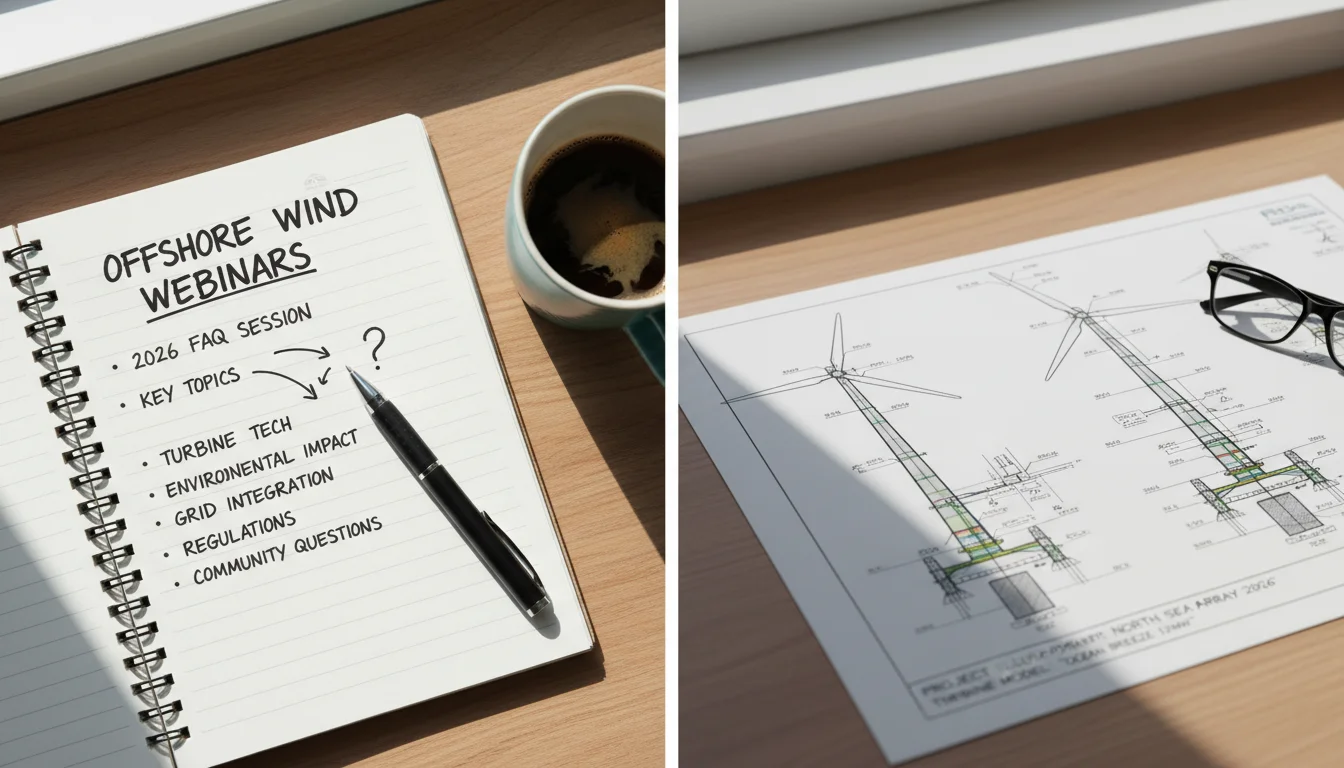
Good note-taking is about capturing insights and questions, not just transcribing the slides. I use bullet points for speed, whether in a digital tool like OneNote or just pen and paper. The key is to have a system. I keep a running list of “Questions for FAQ” in a separate section of my notes. Writing them down as they pop into my head means I don’t forget them by the time the Q&A rolls around.
Pro Tip: The “Why” and “How” Questions
As you take notes, train yourself to formulate questions that dig into the “why” and “how.” Don’t just write down “new policy on bird migration.” Ask, “Why was this policy put in place now?” or “How will they enforce this for projects in the Mid-Atlantic Bight?” Pushing for that next level of detail is what prepares you for a great FAQ session.
4. Engaging in the FAQ Session Effectively
The FAQ session is where you get to interact and get things clarified. Most platforms have a dedicated Q&A box that’s separate from the general chat. Use it. This is where moderators look for questions, and often you can upvote questions from other people. That upvoting helps the organizers see which topics have the most interest from the audience.
When you type your question, get straight to the point. No one wants to read a long preamble. For example, instead of rambling “I have a question about all the different environmental impacts from the turbines, like the noise and the visuals, and what it does to the fish and fishing boats…”, just ask a targeted question like, “What specific measures are being used to mitigate underwater noise from pile driving during turbine installation in the North Sea?” A direct question gets you a direct answer. If your question is super specific to your own project, it might be better to save it for a follow-up email instead of taking up live Q&A time.
Common Mistake: Asking for General Information
It’s a common mistake to ask for information that was just covered in the presentation or is easily found with a quick search. It wastes everyone’s time and it signals that you weren’t really listening. A good question builds on what was just presented, asking for more depth or for clarification on a tricky point.
5. Post-Webinar Follow-Up and Resource Utilization
Your work isn’t done when the webinar ends. Organizers usually send out a recording, the slides, and sometimes a transcript. Go through them within a day or two to lock in what you learned and catch anything you missed. You’ll often find that some of the questions you didn’t get to ask are actually answered right there in the detailed slides.
If you still have unanswered questions after reviewing the materials, it’s perfectly fine to reach out to the presenters or organizers. You can usually find their contact info or connect with them on LinkedIn. When you send a message, mention the specific webinar and the topic that sparked your question. It’s professional and helps them give you a better answer. Also, pay attention to any other resources they mentioned, like white papers or upcoming workshops. If they talked about new permitting under the Clean Water Act for offshore projects, go find those specific EPA guidance documents. This is how you keep learning and stay on top of a field that changes as fast as offshore wind.
Pro Tip: Network Thoughtfully
These webinars are good for networking, too. If another attendee or a speaker made a great point, send them a connection request. A short, personalized message saying what you appreciated about their comment from the webinar is much more effective than a generic request. I ignore generic requests, and you probably do too.
Getting this right turns what could be a passive hour of screen time into a genuine opportunity for learning and connection. When you prepare your tech and your space, listen actively, ask sharp questions during the FAQ session, and follow up afterward, you’ll pull real, lasting value out of every offshore wind environmental webinar you attend.
How do I make sure my internet is stable for a webinar?
Plug in an Ethernet cable. It’s always more reliable than Wi-Fi. If you have to use Wi-Fi, get as close to your router as possible and tell everyone else in the house to get off Netflix for a while. Run a speed test beforehand. You’re looking for at least 5-10 Mbps to avoid stuttering video.
Should I put questions in the chat or the Q&A box?
Always use the dedicated Q&A box for questions. The general chat is for comments, hellos, and technical problems. Moderators are watching the Q&A box, so your question has a much higher chance of being seen and answered if you put it there.
What if my question doesn’t get answered live?
First, check the slides and recording they send out afterward. The answer might be in there. If not, send a polite email or LinkedIn message to the presenter. Mention the webinar and your specific question. Most professionals are happy to clarify a point.
How do I ask better questions in the FAQ?
Be brief and be specific. Don’t ask a three-part question with a long introduction. Ask one thing, and make sure it’s asking for deeper insight, not just for information that was already presented. “How” and “Why” questions are usually better than “What” questions.
Any good tools for taking notes during a webinar?
Yes, things like Microsoft OneNote or Evernote are great because they’re searchable and you can drop screenshots in. But honestly, a plain old notebook works just fine. The best tool is whatever you’ll actually use to quickly jot down key points, ideas, and questions as they come up.


