 By Editorial Team
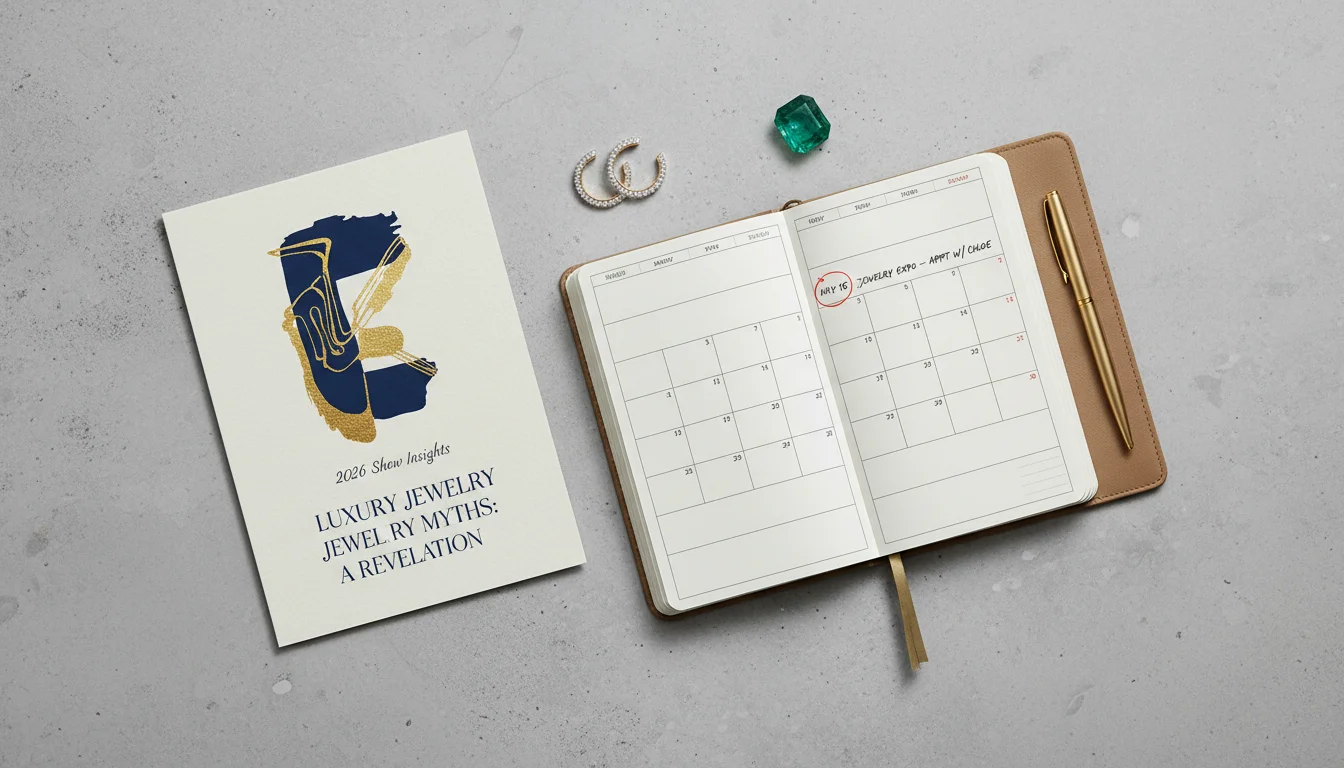
The whole world of high-end jewelry, especially around a major jewelry show, is full of more myths than facts when it comes to buying and owning luxury accessories. A lot of people show up to these things with wrong ideas that ruin what should be a fantastic elegant event, causing them to miss out on great pieces or make some really bad decisions. The amount of bad information out there is staggering, and it completely warps how people see the value and authenticity of what they’re buying.
Key Takeaways
- You can’t value luxury jewelry without reading the actual gemological reports and metal purity certifications. A brand name alone tells you very little.
- Going to a jewelry show lets you talk directly to designers and makers, giving you a chance to learn about a piece’s history and order custom work you can’t get in a store.
- A real investment in luxury accessories is about getting verifiable authenticity and having a long-term care plan to protect its monetary and sentimental worth for years.
- You must get insurance for high-value jewelry. Policies will demand a professional appraisal and often have strict rules about how you store the items to be covered.
Myth 1: Brand Name Alone Guarantees Value and Quality
People seem to think a famous brand name automatically means you’re getting top quality and a solid investment. It’s just not true. While the big luxury houses do have their standards, just buying the name makes you ignore what actually makes a piece valuable. I’ve seen so many people pass up stunning, independently made pieces just because there wasn’t a well-known logo on the box. The Gemological Institute of America (GIA) confirmed in a 2024 report that a diamond’s price is set by its 4Cs (carat, cut, color, clarity), regardless of who set it. A small, independent artist using a high-grade F-color, VS1 clarity diamond with an excellent cut is giving you far more real value than a big brand selling a mass-market piece with a lower-grade stone of the same weight. The real worth is in the hands-on craftsmanship, the quality of the stones, and the purity of the metal. You have to look at the tangible facts, not just the marketing.
Beach-ready, wedding-ready, anytime-ready skin
Look and feel your best for every occasion. Find a waxing studio near you and book ahead.
Find a Studio Near You →Myth 2: All Luxury Jewelry is a Guaranteed Investment that Appreciates
The idea that any expensive piece of jewelry is going to be worth more later on is a dangerous and costly assumption. While it’s true that some extremely rare pieces can appreciate, especially those with documented history or from famous collections, the vast majority of new jewelry won’t. Think of it like buying a new car, not fine art. A 2023 study from Sotheby’s showed that while extraordinary gems and signed vintage items from specific eras (like Art Deco or Belle Époque) do appreciate consistently, modern jewelry works differently. The retail markup is so high that a piece loses a huge chunk of its price the second it enters the secondary market. The pieces that are true investments are almost always found at specialized auctions or through private sales, and they come with a mountain of paperwork proving their provenance. For almost everything else, the value is in how it looks, what it means to you, and the sheer joy of wearing it, not in its potential as a financial asset.
Myth 3: You Can’t Get a Good Deal at a High-End Show
It’s a huge mistake to assume a luxury jewelry show is only for paying sticker price and that there’s no room for negotiation. That’s completely wrong, particularly at a big industry event like the annual Atlanta Jewelry Show at the Cobb Galleria Centre. At these shows, you’re often dealing directly with the designers and wholesalers, which cuts out at least one layer of retail markup. I’ve personally coached clients who walked away with incredible value because they talked directly to the maker, who might offer a show-special price for a quick sale or better terms on a custom commission. If you do your homework and come prepared with smart questions about sourcing, certifications, and payment, you can get a much better outcome. A 2025 American Gem Society (AGS) survey even found that almost 30% of people at major trade shows got exclusive offers they’d never see in a regular store. It all comes down to being prepared and having the confidence to ask.
Myth 4: Online Shopping is Just as Good as In-Person for Luxury Pieces
Sure, online shopping is convenient, but for luxury accessories of any real value, it’s a terrible substitute for seeing the piece in person. You completely lose the feel of it in your hand, the chance to see how the metal and stones react to different light, and the ability to appreciate the fine details of the work. A digital picture just can’t do it justice. Gemstones in particular have unique life and character, fire, brilliance, scintillation, that a static photo will never capture. A 2024 report from the National Retail Federation (NRF) even showed that for any purchase over $5,000, people were far more confident buying when they had physically seen the item first. And beyond that, a jewelry show is your chance to talk face-to-face with the jewelers and gemologists who can give you straight answers on origins, ethical sourcing, and proper care. That personal connection creates a level of trust and education a website can’t touch. You simply can’t judge the weight, balance, and play of light in a perfectly cut sapphire by looking at a screen.
Myth 5: Proper Care for Fine Jewelry is Overly Complicated and Expensive
People have this idea that you need a constant and expensive professional service to maintain luxury jewelry. While getting it professionally cleaned and checked is a good idea, most of the day-to-day care is simple and can be done at home for next to nothing. The essentials are just cleaning it gently with mild soap and water, using a very soft brush to get grime out of the settings, and storing it correctly so it doesn’t get scratched or tangled. For example, keeping pieces in individual soft pouches or a box with compartments does more good than anything else. According to the Jewelers of America (JA), most damage comes from simple neglect, like wearing rings while doing heavy work or letting pearls get sprayed with hairspray, not from some complex maintenance failure. Jewelers generally suggest a professional check-up once a year which usually includes a deep clean and an inspection of the prongs and clasps. It’s typically an affordable service that prevents a small problem from becoming a disaster.
Myth 6: You Don’t Need Insurance for Jewelry You Rarely Wear
This is probably the single most expensive mistake you can make. It doesn’t matter if a piece is worn every day or only once a year for a special occasion, its financial value is the same, and it’s just as vulnerable to being lost, stolen, or broken. People think that keeping a necklace in a safe is enough protection, but safes can be broken into and accidents happen. A 2025 study by the Insurance Information Institute (III) pointed out that a huge number of jewelry thefts happen outside the home, like when people are traveling or at an event. A proper jewelry insurance policy covers theft, accidental damage, and even “mysterious disappearance.” To get one, you’ll need a professional appraisal to set the item’s replacement value, and the policy will have specific conditions. Not insuring a valuable piece, no matter how often you wear it, is a foolish gamble. To get the most out of the world of high-end jewelry and luxury accessories, you have to be informed and get past these common myths. When you focus on quality you can verify, understand how the market really works, and are proactive about care and protection, your enjoyment of these beautiful objects will be backed by some practical wisdom.
How often should fine jewelry be professionally cleaned and inspected?
Take it to a professional jeweler at least once a year. They’ll do a thorough cleaning and check for things like loose stones or worn-out prongs, catching small issues before they turn into major repairs or a lost gem.
What certifications should I look for when purchasing diamonds or other gemstones?
For a diamond, insist on a grading report from a reputable independent lab like the Gemological Institute of America (GIA), the American Gem Society (AGS), or the International Gemological Institute (IGI). These labs provide an unbiased quality assessment. For colored gemstones, a report from a major lab like GIA or Gübelin Gem Lab is also the standard.
Is it possible to customize a piece of jewelry at a show event?
Yes, and it’s one of the best reasons to go to a show. You’ll find many designers and artisans who are there specifically to take on bespoke projects. Talking to them directly is a great way to commission a unique piece, pick your own stones, or have an existing design modified.
What’s the best way to store luxury jewelry at home?
Keep every piece separate to prevent scratching. Use individual soft pouches or a fabric-lined jewelry box that has different compartments. This also keeps chains from getting tangled and protects items from dust and humidity. Always store them away from direct sunlight and extreme heat or cold.
Does ethical sourcing really impact the value or desirability of luxury jewelry?
Yes, it absolutely does. More and more, buyers want to know where their gems and metals came from. Brands that can prove their materials are ethically and sustainably sourced have a much stronger reputation. Having that documentation can add to a piece’s story and its long-term perceived value.


