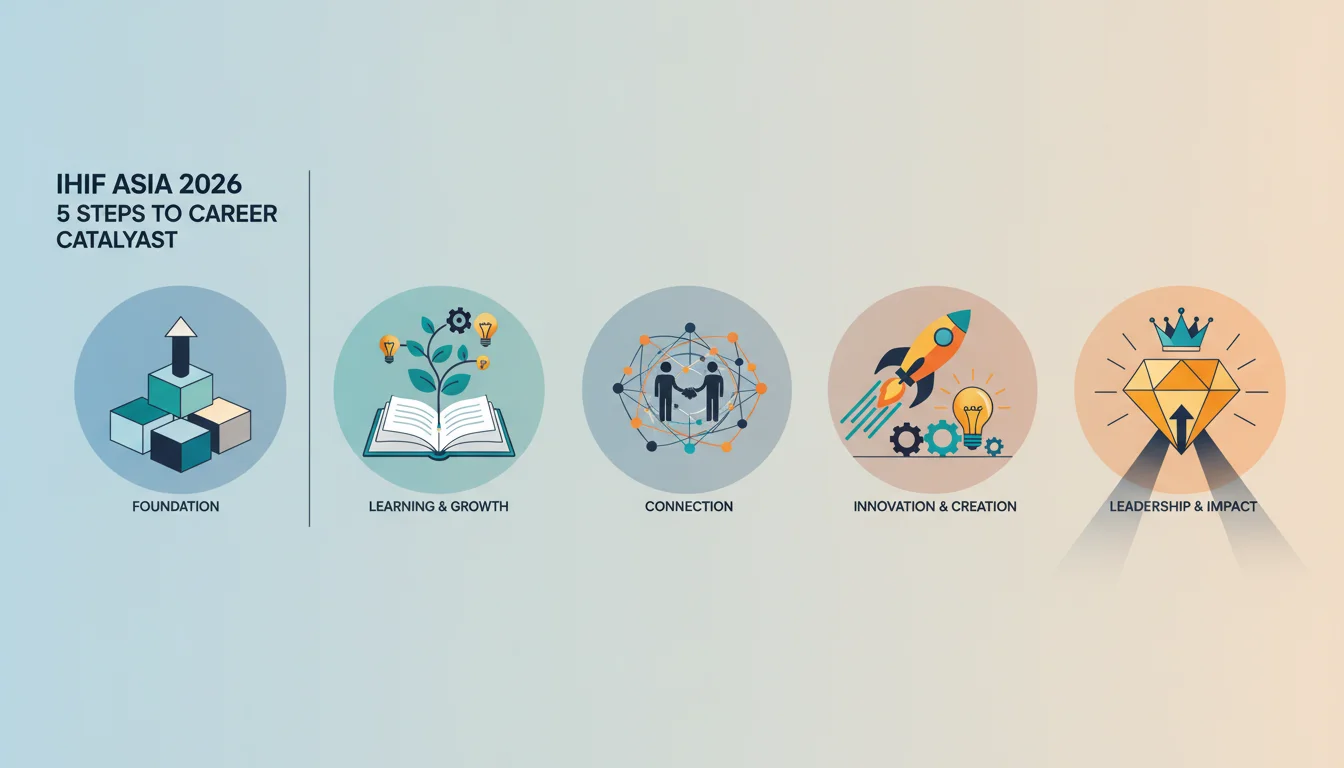
 By Emily Grant
The IHIF Asia conference represents a significant opportunity for hospitality professionals, yet many attendees struggle to translate the insights gained into tangible career advancement. Networking often feels transactional, and the sheer volume of information can overwhelm even seasoned executives, leaving them with a stack of business cards but no clear path forward. How can you genuinely distinguish yourself and transform conference participation into a powerful catalyst for your professional trajectory?
Key Takeaways
- Research 5-7 target individuals and 3-5 target companies before the IHIF Asia conference to focus networking efforts effectively.
- Prepare three concise, value-driven talking points about your expertise or company to use during informal conversations.
- Follow up with new contacts within 24 hours of meeting them, referencing a specific detail from your conversation to personalize the interaction.
- Actively participate in at least two Q&A sessions during IHIF Asia to demonstrate engagement and thought leadership.
The Initial Misstep: Generic Approaches to High-Stakes Events
I’ve observed countless professionals attend high-profile events like IHIF Asia with good intentions but flawed execution. Their approach often mirrors a scattershot strategy: collecting as many business cards as possible, attending a random selection of sessions, and hoping that sheer presence translates into opportunity. This often results in a feeling of exhaustion and minimal return on investment. One common pitfall involves treating networking as a numbers game, focusing on quantity over quality. Attendees might approach every person within arm’s reach, delivering a generic elevator pitch without understanding the other person’s role or interests. This “spray and pray” method rarely yields meaningful connections, nor does it project an image of thoughtful professionalism.
Another frequent mistake involves a lack of pre-conference preparation. Many arrive without a clear agenda beyond “seeing what’s new.” They might glance at the speaker list but fail to identify specific individuals or companies whose expertise aligns with their own career goals or business objectives. Without this foundational research, interactions become superficial. You miss the chance to engage speakers with informed questions or to connect with potential collaborators on a deeper level. This reactive stance means you’re always playing catch-up, rather than proactively shaping your conference experience. The outcome? You leave feeling like you’ve been to a large gathering, but not one that genuinely propelled your career forward.
Strategic Preparation: Building Your IHIF Asia Blueprint
The path to making IHIF Asia truly impactful begins weeks before you step onto the exhibition floor. Your goal is to move beyond passive attendance and become an active, recognized participant. Start by carefully reviewing the conference agenda. Identify sessions directly relevant to your professional growth or your company’s strategic direction. Don’t just pick topics that sound interesting. Select those that address current challenges you face or future trends you need to master. For instance, if your focus is sustainable hotel development in Southeast Asia, pinpoint every session discussing green building standards, renewable energy integration, or responsible supply chains. According to a 2024 survey by the HospitalityNet Insights Group, professionals who tailor their conference attendance to specific learning objectives report a 35% higher satisfaction rate with the event’s value.
Next, dive into the speaker and attendee lists. This is where you begin to build your targeted engagement strategy. Identify key influencers, potential mentors, or representatives from companies you admire. Research their recent work, publications, or LinkedIn activity. Understand their contributions to the hospitality sector. Knowing, for example, that a particular CEO recently spearheaded a successful digitalization initiative in a rival market allows you to approach them with an informed, relevant question, immediately elevating your interaction beyond a mere introduction. I always advise my clients to prepare specific questions for at least three speakers they plan to hear, questions that demonstrate genuine engagement with their work.
Simultaneously, refine your personal brand message. What unique value do you bring to the table? Develop a concise, compelling statement that articulates your expertise and your professional aspirations. This isn’t an elevator pitch in the traditional sense. It’s a statement designed to spark further conversation. Instead of saying, “I’m a hotel manager,” try, “I specialize in optimizing guest experience through data-driven operational efficiencies, leading to a 15% increase in repeat bookings at my previous property.” This level of specificity is what captures attention. This preparation phase is not optional. It dictates the quality of every subsequent interaction.
Get smooth and event-ready
Look and feel your best for every occasion. Find a waxing studio near you and book ahead.
Find a Studio Near You →Engaging Effectively: From Passive Observer to Active Contributor
Once at IHIF Asia, your prepared blueprint guides your actions. Prioritize attending your selected sessions, but don’t just sit and listen. Actively participate in Q&A segments. Formulate questions that are insightful, demonstrate your understanding of the topic, and ideally, invite further discussion. A well-articulated question not only clarifies a point for you but also positions you as a thoughtful contributor in the eyes of both the speaker and other attendees. This visibility is invaluable. I’ve witnessed countless instances where a sharp question from the audience led to a direct follow-up conversation after the session, opening doors that would otherwise remain closed.
Networking during breaks and social events requires a different, yet equally strategic, approach. Instead of aimlessly wandering, seek out the individuals you identified during your research. Approach them with confidence, but more importantly, with a genuine interest in their work. Reference something specific you learned about them or their company. “Mr. Lee, I was very impressed by your recent article on sustainable luxury resorts. I’m curious how you’re addressing the supply chain challenges unique to the Southeast Asian market.” This instantly establishes a foundation for a substantive conversation, distinguishing you from the multitude of generic greetings. Remember, the goal isn’t to sell yourself immediately, but to build rapport and identify common ground.
One critical aspect many overlook is the power of observation. Pay attention to group dynamics. Who are the people others gravitate towards? Who asks the most pertinent questions? Observing these social cues can help you identify additional valuable contacts you might have missed in your initial research. And be ready to share your own expertise. Be generous with your insights, but don’t monopolize conversations. A balanced exchange is what encourages true connection. The PwC Hospitality & Leisure sector analysis from 2025 frequently emphasizes the shift towards collaborative innovation, making genuine knowledge exchange at conferences more critical than ever.
The Follow-Up: Consolidating Connections and Capitalizing on Momentum
The true value of your IHIF Asia attendance often materializes in the days and weeks following the event. The immediate post-conference period is important for consolidating the connections you’ve made. Within 24 to 48 hours of meeting someone, send a personalized follow-up email. This email should reference a specific detail from your conversation, demonstrating that you were engaged and that the interaction was meaningful to you. Avoid generic templates. For example, “It was a pleasure discussing the future of AI in hotel operations with you at IHIF Asia. I found your insights on predictive maintenance particularly compelling, especially regarding its application in older properties like mine.” This level of detail makes your email stand out in a crowded inbox.
Beyond initial contact, consider how you can provide value to your new connections. Share an article you think they might find relevant, or introduce them to someone in your network who could assist them. Reciprocity is a powerful tool in professional relationship building. Don’t immediately ask for something. Instead, focus on nurturing the relationship. Schedule brief virtual coffee chats with individuals who hold particular interest for your career trajectory. These informal conversations allow for deeper engagement than a conference floor interaction ever could. This isn’t just about collecting contacts. It’s about building a strong professional network that can offer mutual support and open doors to new opportunities. The STR Global report on hospitality talent trends from early 2026 underscored the increasing importance of network strength for career progression in a competitive market.
What Went Wrong First: The Pitfalls of Neglecting Post-Conference Action
Many professionals attend conferences, collect a stack of business cards, and then let those cards gather dust. This is perhaps the biggest failure point in using conference attendance. Without a systematic follow-up strategy, even the most promising connections wither. I’ve seen executives return from IHIF Asia energized, only to lose that momentum because they lacked a clear plan for what to do next. They might intend to send emails, but procrastination sets in, or they get bogged down in daily tasks, and suddenly weeks have passed. The opportunity for a warm introduction or a timely collaboration is lost. A connection made at a conference has a limited shelf life. The longer you wait to re-engage, the less likely that connection is to translate into anything substantive.
Another common misstep involves making the follow-up entirely self-serving. An email that immediately pitches a product or asks for a job interview without any prior relationship building often backfires. It signals that your initial interaction was merely a means to an end, undermining any trust or rapport you might have established. Building professional relationships requires patience and a genuine investment in the other person. Neglecting this principle can not only close doors but also damage your professional reputation. Think of it as cultivating a garden: you can’t just plant a seed and expect a harvest without consistent watering and care. The same applies to professional networking.
Measurable Results: Transforming Conference Attendance into Career Capital
When executed with precision, your strategic approach to IHIF Asia yields tangible, measurable results that extend far beyond a new LinkedIn connection. First, you’ll experience a significant expansion of your professional network, but critically, this will be a network of quality contacts. These are individuals who understand your value proposition, share common interests, and are more likely to engage in meaningful dialogue or collaboration. I’ve seen clients secure new business partnerships, land coveted speaking engagements, and even transition into leadership roles directly through relationships forged and nurtured from targeted conference attendance.
Beyond direct connections, your visibility within the industry will increase. Thoughtful participation in Q&A sessions, informed engagement with speakers, and well-crafted follow-ups position you as a knowledgeable and engaged professional. This enhanced reputation can lead to unsolicited opportunities, such as invitations to join industry panels, contribute to publications, or be considered for leadership positions within professional associations. This isn’t about immediate gratification. It’s about building long-term career capital that pays dividends over time. The World Travel Market Global Trends Report of 2025 highlighted personal branding and network depth as primary drivers of career resilience in the travel and hospitality sectors.
Finally, the insights gained from targeted session attendance and direct interaction with industry leaders provide a competitive edge. You’ll return with a clearer understanding of emerging trends, innovative solutions, and potential disruptions within the hospitality field. This knowledge allows you to proactively adapt your strategies, implement new technologies, or even pivot your career direction with greater confidence. For instance, discovering a nascent technology discussed in a niche IHIF Asia session could give your company an important head start in its adoption, leading to significant operational efficiencies or new revenue streams. The objective is not merely to attend, but to absorb, synthesize, and apply, transforming conference information into actionable intelligence that drives both personal and organizational success.
Mastering your approach to events like IHIF Asia is a strategic investment in your professional future. By moving beyond passive attendance and embracing a structured, proactive engagement and follow-up strategy, you can transform conference participation into a powerful engine for career advancement and industry influence.
What is the optimal number of people to target for networking at IHIF Asia?
Focus on quality over quantity. Aim to identify and genuinely connect with 5-7 individuals whose work or company directly aligns with your professional goals or interests. This allows for more meaningful interactions and follow-ups.
How soon after a conference should I follow up with new contacts?
Send personalized follow-up emails within 24 to 48 hours of meeting someone. This timeframe ensures the interaction is still fresh in their mind and increases the likelihood of a response.
What kind of questions should I prepare for speakers?
Prepare questions that are insightful, demonstrate your understanding of their topic, and ideally, invite further discussion. Avoid generic questions that could be answered by simply re-reading their presentation slides.
Is it acceptable to ask for a job or partnership in a first follow-up email?
No, it is generally not advisable to make an immediate request for a job or partnership. Focus on building rapport and providing value first. Allow the relationship to develop naturally before making direct asks.
How can I make my follow-up emails stand out?
Personalize each email by referencing a specific detail from your conversation at IHIF Asia. Mention a particular point discussed, a shared observation, or an insight they offered. This shows genuine engagement and helps them remember you.


