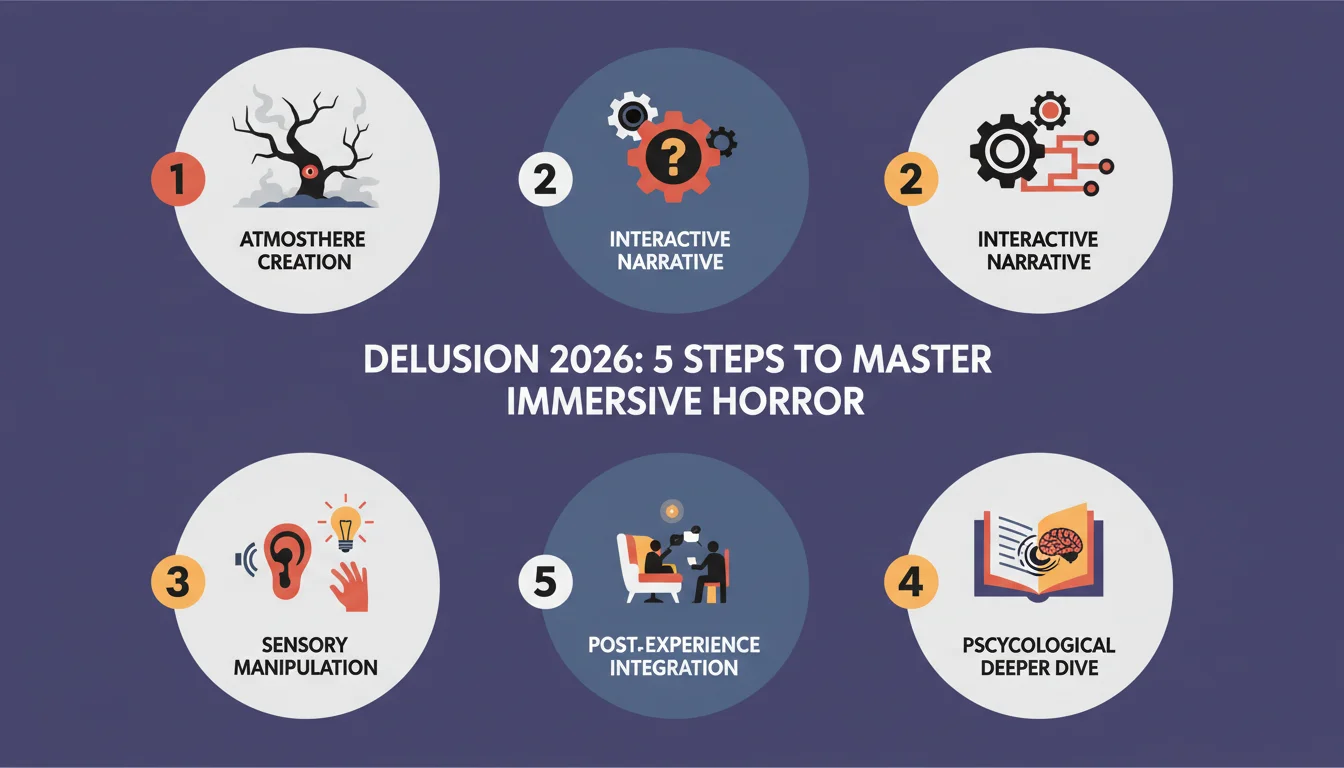
 By Editorial Team
For a lot of us, an immersive horror event like Delusion brings up a mix of pure excitement and deep-seated dread. We want the thrill and the carefully built terror, but there’s always that nagging question: am I *really* ready for the jump scares, the actor encounters, and the interactive parts? The real problem is making sure you can confidently dive into an experience that’s built to push you, so you get every dollar’s worth of heart-pounding action out of your ticket.
Key Takeaways
- Know the story for the year. Delusion usually announces its theme by June, so you can start to guess what characters and plot points are coming.
- Get your body ready. A couple of weeks of light cardio and stretching will make a huge difference when you have to move fast.
- Keep your group small, ideally 2 to 4 people. This gives everyone a chance to be part of the action without creating a mob.
- Dress for action. Wear dark, comfortable clothes you can move in and, most importantly, closed-toe shoes for any kind of terrain.
- Learn a fast mental reset. A quick breathing exercise can pull you back together after a crazy scene so you can jump right back into the story.
The Problem: Unpreparedness Steals the Thrill
I’ve seen it happen again and again. People show up to these incredible horror productions totally psyched, but within 20 minutes they’re overwhelmed, confused, or physically exhausted. This is a failure of preparation, not courage. Imagine dropping over $100 for a ticket to a top-tier show only to spend half of it frozen to the spot, missing story cues, or even having to bail because the physical side was more than you bargained for. This is a missed opportunity to connect with a really unique kind of art. The amazing sets, the actors, the scares, they all depend on the audience being present and able to react. When attendees are worried about tripping or the intensity is just too much, the whole illusion shatters. You become a spectator, which is a complete misunderstanding of what these things are all about.
What Went Wrong First: The “Just Show Up” Fallacy
In the early days, most of us treated immersive horror way too casually. We’d buy tickets, maybe skim a trailer, and just roll up. That “just show up” approach created a ton of problems. I remember one event back in 2019, a really physical one in an old factory, where I saw person after person slipping and sliding on the uneven floors because they wore fashion sneakers with zero grip. Others, who didn’t get that there were escape-room puzzles mixed in, got so frustrated trying to figure out clues that they completely checked out of the story. And then there was the classic mistake of rolling in with a crew of 6 or 8 people. While that’s great for a night out, it kills the immersive vibe because actors can’t possibly engage with that many people and moving through tight sets becomes a nightmare. The biggest screw-up, though, was not being ready for the mental game. Without any prep, the constant tension could flip excitement into real anxiety, causing people to leave early or just feel totally out of step with the show’s flow. It was obvious that you couldn’t treat this like going to the movies.
The Solution: A Proactive Approach to Immersive Terror
To really get into an immersive horror show like Delusion, you need to prep your body, your mind, and your gear. This whole process is about building a solid foundation so you can actually enjoy the surprises when they come. Think of it like training for a theatrical marathon where you’re one of the runners, not just a face in the crowd.
Get smooth and event-ready
Look and feel your best for every occasion. Find a waxing studio near you and book ahead.
Find a Studio Near You →Step 1: Deep Dive into the Lore and Logistics
Before you even think about what to wear, you need to know what you’re getting into. Every year, Delusion has a completely new story and location. The 2025 theme, “The Crimson Pact,” for example, was set in a haunted opera house and had a bunch of different zones that required everything from quiet snooping to full-on running. A few weeks before your show, hit the official Delusion website. Look for any story details, character backstories, or environmental hints they’ve released. The goal is context, not spoilers. Knowing you might run into a “vengeful maestro” helps you anticipate how to react to certain characters. And pay very close attention to their FAQ page. That’s where you’ll find the gold, details about physical demands, age limits, and actor contact. Will you have to crawl? Is there a chance you’ll be separated from your friends? Also, check out spoiler-free reviews from past years on sites like Hauntworld.com or HorrorBuzz.com. They give you a feel for the show’s general intensity without ruining the plot. Understanding the basic premise helps you get into the story from the second you walk in the door.
Step 2: Physical Conditioning for Dynamic Encounters
You’re going to be moving. These shows are physical. You might be running, crouching, climbing, or squeezing through small spaces. I always tell people to start a simple two-week prep routine beforehand. This means ensuring basic mobility and stamina, not becoming some kind of athlete. Focus on light cardio, like a brisk 30-minute walk or jog a few times a week. Add in some simple stretches like leg swings, arm circles, and twisting your torso to stay loose. Think about the actions you might have to take, turning on a dime, stopping suddenly, reaching for something. A few bodyweight squats and lunges will help build the leg strength for quick moves or holding a low position. And I absolutely cannot say this enough: wear sturdy, closed-toe shoes with good grip. No heels, no sandals, nothing that will make you slip or slow you down. Dark clothing is also a good call, since it helps you fade into the background and might keep you from getting singled out by an actor. This basic physical prep keeps you from being distracted by being out of breath or worried about falling, so you can stay focused on the show.
Step 3: Mental Fortitude and Group Dynamics
The mental game is the part everyone forgets. Immersive horror is all about psychological pressure. To handle it, have a quick reset technique ready. Before you go in, or even during a quiet moment inside, take a few deep breaths: inhale for four seconds, hold for four, and then exhale for six. This technique actually works to lower your heart rate and get you back into a state of controlled awareness. It’s about managing your reaction to fear so you can stay in the game. And please, choose your group carefully. For the best experience, a group of 2 to 4 people is perfect. A small team like that means everyone gets to interact with actors and puzzles for a much more personal and intense show. Bigger groups just cause logjams and water down the experience for everyone. Talk to your group before you go. Are you all on the same page about jump scares? Who’s going to take the lead if you get split up? Getting this sorted out first prevents arguments when the pressure is on. The goal is to experience the fear, not get paralyzed by it.
Step 4: Post-Event Debrief and Integration
The show isn’t over when you walk out the exit. A really important step everyone skips is the debrief. Right after, find a bar or coffee shop and just talk with your group about what the hell just happened. What were the best scares? Which plot points did you catch? How did you react when that thing happened? This conversation processes the adrenaline and fear while cementing the actual memories and details. You get to laugh at how you all screamed, talk about the amazing production, and appreciate the whole thing as a piece of art. People who do this find the experience becomes much more memorable and less like a lingering bad dream. You’re basically integrating the adventure into a good story you can tell later.
The Result: Confident Immersion and Lasting Memories
People who follow this advice have a completely different and better experience. Instead of feeling steamrolled, they feel empowered and part of the action. One person, Sarah J., who prepped for “The Crimson Pact” in 2025, told me, “I wasn’t just reacting. I was part of the story. When the actor grabbed my arm, I understood *why* from a story perspective which made it so much more terrifying and real.” That kind of engagement is what turns a regular scare-fest into a memorable, interactive story. You’re less likely to miss plot points, you can actually help solve puzzles, and you’re agile enough to move through the space without a second thought. You get a night of thrills and a real sense of accomplishment. You leave buzzing, not drained and frustrated, with stories you’ll actually want to tell everyone.
Preparing for Delusion isn’t about trying to make it less scary. It’s about making sure you’re equipped to handle the fear. When you understand the story, get your body and mind ready, and talk it through afterward, you stop being a spectator and become a real participant. Every scream and every gasp makes the night that much better.
What is the ideal group size for an immersive horror event?
A group of 2 to 4 is the sweet spot. This size is small enough for everyone to get personal interactions with actors and puzzles, and it’s much easier to move through the sets without getting bunched up or left out.
What kind of shoes should I wear to an immersive horror event?
Wear comfortable, sturdy, closed-toe shoes that have good grip. Sneakers or light hiking boots are perfect. Absolutely no heels, sandals, or flip-flops, you might be on uneven ground or need to move quickly.
How can I manage my fear during intense moments in an immersive experience?
Use a simple breathing trick: inhale for 4 seconds, hold for 4, then exhale for 6. It’s a quick way to lower your heart rate and refocus. Also, reminding yourself that it’s a performance and focusing on the story helps keep you grounded.
Is it okay to research the event’s theme beforehand?
Yes, you absolutely should. Checking the official website for the year’s theme and story gives you context that helps you get into the world faster. This isn’t about spoiling jump scares. It’s about setting the stage for a better experience.
What should I do immediately after the event?
Go debrief with your group. Find a place to sit down and talk through what you just experienced, your reactions, the best scares, the plot points you picked up on. It helps process the adrenaline and solidifies the experience as a great memory.


