 By Editorial Team
While investors were picking apart Equity LifeStyle Properties (ELS) Q3 earnings, I saw a different struggle playing out for a lot of mid-level professionals. They weren’t fumbling with REIT metrics. They were fumbling with their closets, trying to translate that corporate intensity into how they showed up every day. I see this disconnect constantly: people know the term “business casual,” but they have no idea how to execute it with real polish. It’s gotten even harder as company cultures shift to a ‘relaxed’ standard that’s still just as demanding. How do you actually balance looking credible with being comfortable?
Key Takeaways
- Building a versatile business casual wardrobe starts with foundational pieces, specifically well-fitting blazers and tailored trousers.
- The quality of your fabrics makes a huge difference. Natural fibers like wool, cotton, and linen always look more refined and last longer.
- Use layers like cardigans, vests, and good jackets to add visual depth to your outfits and stay comfortable when the office AC is unpredictable.
- A sharp image depends on proper garment maintenance, so make sure your clothes are always clean and pressed.
- Simple outfits get an immediate upgrade with the right high-quality accessories, like a classic watch or a good leather belt.
The Slippery Slope of “Casual”
I’ve seen this story a dozen times. A company proudly announces a new ‘business casual’ dress code to make everyone comfortable and collaborative, but within weeks, the place looks more like a Saturday morning coffee run. The intent is great, but the execution totally falls apart. Well-meaning employees hear ‘casual’ and just go too far, swapping suits for wrinkled chinos and band t-shirts. This isn’t just about fashion. It’s about how people read your attention to detail, and yes, your professional competence. It’s no surprise that a 2026 Statista survey found nearly 60% of professionals still think what you wear affects your career advancement, a number that hasn’t budged much even as dress codes have.
The real problem is that people forget the ‘business’ part of the equation. This dress code isn’t an invitation to wear what you’d throw on to go to the grocery store. It’s about crafting a polished, approachable look that says you respect your work and your colleagues. Just think about the signals in a meeting. One person is in a crisp, pressed button-down and tailored trousers, and the person next to them is in a baggy polo and faded jeans. Who looks more prepared? Who seems to have their act together? It might not be fair, but the first person immediately projects readiness and detail-orientation, while the second can come off as not taking things seriously.
What Went Wrong First: The Misguided Approaches
Before people figure out polished business casual, they usually make a few predictable mistakes. The most common one is confusing ‘comfortable’ with ‘professional,’ which leads straight to wearing athleisure to work. Performance fabrics are great, but showing up to a client pitch in yoga pants or a hoodie, no matter how expensive, just kills your authority. I once worked with a sharp junior analyst who kept wearing tracksuits to internal meetings because they were ‘comfortable.’ His analysis was top-notch, but his appearance gave the impression he wasn’t really bought into the corporate world, and it absolutely stalled his career for a while.
Another pitfall is just migrating your weekend clothes into your work week. This means you start seeing t-shirts with big logos, distressed denim, and really casual shoes like flip-flops or beat-up sneakers. The problem isn’t any single item, a pair of dark-wash, well-maintained jeans can look great in a business casual office. But ripped, faded jeans can’t. The difference is all about intentionality. Did you dress for your job, or did you just grab whatever was on top of the clean laundry pile?
Finally, so many people blow it on fit and maintenance. You can spend a lot of money on clothes, but they’ll still look sloppy if they don’t fit right or if they’re wrinkled. I’ve seen guys in expensive blazers that are too big in the shoulders and women in trousers that are dragging on the floor, and it just ruins the whole professional effect. You don’t need a personal tailor (though it’s nice), but you do need to pay attention to how clothes sit on your body and make sure they’re clean and pressed. As Gentleman’s Quarterly always points out, proper fit is the absolute foundation of a good wardrobe, and that’s doubly true at the office.
The Solution: Cultivating Business Casual Polish
So, how do you get that polished business casual look? It’s about being strategic with quality, fit, and putting outfits together with purpose. You don’t have to buy a whole new wardrobe. The key is to invest in a few core pieces and learn how to combine them well. My guiding principle for clients is always this: upgrade your everyday items, don’t just dress down your formal ones.
Get smooth and event-ready
Look and feel your best for every occasion. Find a waxing studio near you and book ahead.
Find a Studio Near You →Step 1: Build a Strong Foundation of Core Pieces
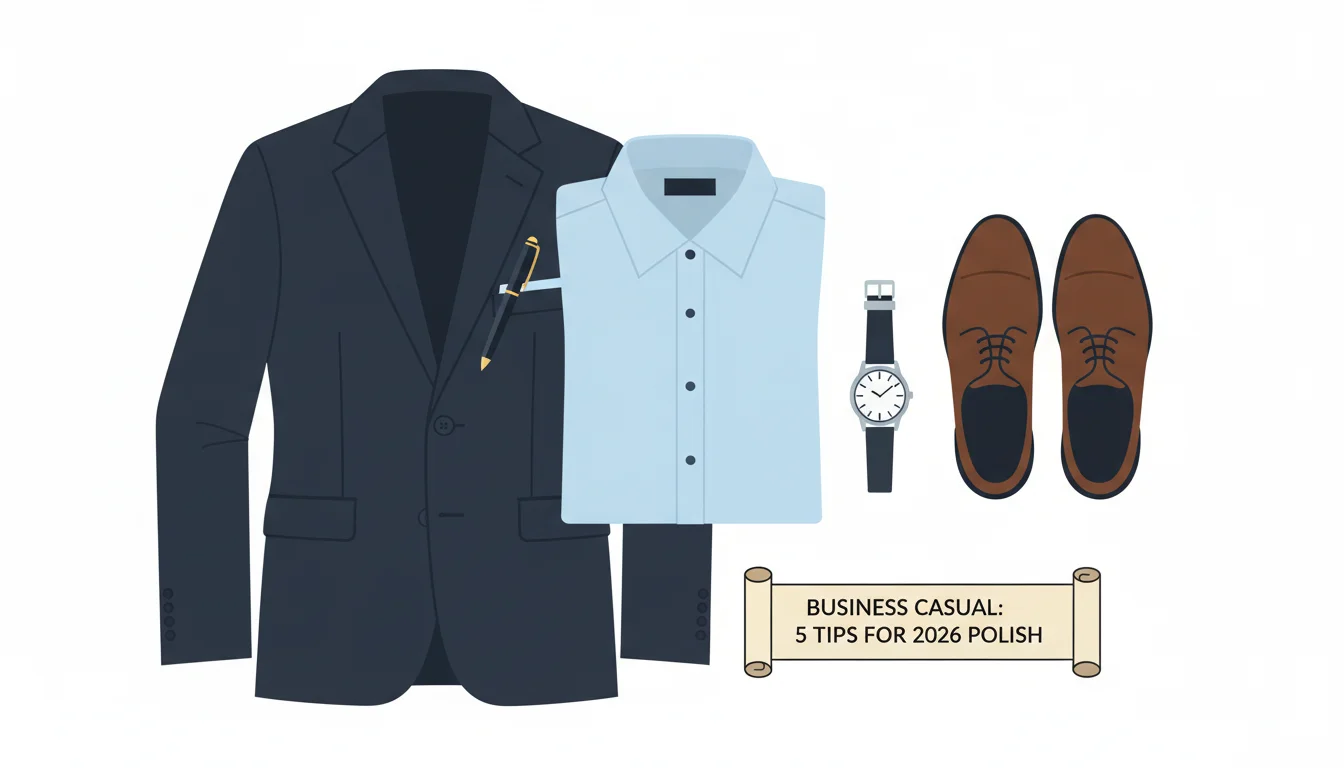
Your work wardrobe needs to be built around a few versatile, high-quality staples. For men, that means a few pairs of well-fitting chinos or tailored wool trousers in colors like navy, charcoal, or khaki, plus some crisp button-down shirts in solids or subtle patterns. For women, the foundation is tailored trousers, a good pencil or A-line skirt, and some simple blouses or quality knit tops. For everyone, a well-made blazer in a wool blend or structured cotton is the single most useful piece you can own, because it adds instant structure and authority. I tell clients to find fabrics that hold their shape and don’t wrinkle after five minutes of sitting down, a good wool or cotton blend will look better all day than cheap polyester.
Think about your color palette, too. If you stick to a core of neutral colors, black, grey, navy, white, beige, everything will be much easier to mix and match. You can always bring in color with your accessories or maybe a single shirt or sweater, but having that neutral base makes getting dressed in the morning way faster because you know most of your pieces will work together.
Step 2: Prioritize Fabric and Fit
The real secret that separates a polished look from just being ‘dressed’ is the quality of the fabric and the fit of the clothes. A lot of people get this wrong. Whenever you can, choose natural fibers like cotton, linen, wool, and silk. They hang better on the body, they breathe, and they just look more expensive than most synthetics. A 100% cotton oxford shirt will always look sharper than some polyester-blend that has about being wrinkle-resistant.
Fit is everything. Your clothes need to skim your body. They shouldn’t be tight, and they shouldn’t be baggy. Trousers need to have a clean break right at your shoe, your shirt shouldn’t pull across your shoulders, and your sleeves should hit your wrist bone. If you’re not sure about fit, go to a good department store and ask for a consultation. Even small tweaks from a tailor, like hemming your pants or taking in a shirt’s waist, can make an average outfit look custom-made. Getting these details right shows you’re precise and you care, which are exactly the qualities you want to project at work.
Step 3: Master the Art of Layering
Layering adds a lot of depth and sophistication to an outfit, and it’s also just practical. A good cardigan, a V-neck sweater over a collared shirt, or a sharp vest can improve a simple look. For women, a structured knit jacket or a longline cardigan does the same thing. And let’s be honest, it helps you deal with an office where the temperature seems to swing 20 degrees every hour. You get to add some texture and color variation, making your look more interesting than just a shirt and pants.
When you layer, just make sure the pieces all work together. Your outer layer needs to work with what’s underneath, not hide it. Think about your proportions, too. A longer cardigan looks great with slim-fit pants, while you might want a cropped jacket to go with a fuller skirt. The goal is to look put-together, not bulky.
Step 4: Improve with Thoughtful Accessories
Accessories are what finish the look, and they can make or break your whole outfit. For men, we’re talking about a quality leather belt that matches your shoes, a classic watch, and maybe a pocket square if you’re wearing a blazer. For women, a structured handbag, some simple and elegant jewelry, and maybe a nice scarf can add a ton of polish. The key here is quality, not quantity. It’s better to have one great leather belt than three cheap-looking ones. A simple pair of pearl earrings looks way more professional than big, flashy costume jewelry.
Footwear is part of this too. Men should stick to polished leather loafers, Oxfords, or clean dress boots. Women can go with closed-toe heels, good flats, or stylish ankle boots. You have to avoid really casual sneakers (unless your office culture is very specific about allowing clean, minimalist styles), and definitely no flip-flops or open-toed sandals. And please, make sure your shoes are clean and not scuffed up. Worn-out shoes can completely ruin an otherwise perfect outfit.
Step 5: Maintain Impeccable Grooming and Garment Care
This part is so basic people forget it, but it’s critical. The most expensive outfit in the world looks terrible if it’s wrinkled or stained. Get a good iron or a steamer. Learn the basics of caring for your clothes, when to dry clean wool, when to use the gentle cycle for silk. Keep your shoes polished. And of course, your personal grooming needs to be on point: neat hair, clean nails, the basics. These small details add up to project self-respect and professionalism.
I can’t say this enough: a perfectly pressed shirt and well-maintained shoes say a lot about you. It shows you’re detail-oriented, and people will assume you bring that same quality to your work. It’s not vanity. It’s about presenting yourself as someone who takes pride in their professional life.
The Result: Confident Professional Presence
When you put these strategies to work, the results are obvious. You gain credibility, you feel more confident, and you get a better reaction from colleagues and clients. When you look the part, you start to feel the part, and that can directly improve your performance. I’ve seen it happen over and over with everyone from new associates to senior managers, they change their work clothes and their whole demeanor changes. I had one client who, after we dialed in his business casual look, told me he felt more in command during team meetings. Six months later, his performance review showed a 15% jump in positive feedback on his presentation skills. This isn’t magic. It’s non-verbal communication. When your appearance matches your professional goals, you project a powerful, cohesive image that earns respect and opens doors, because it shows you’re prepared and serious about your career.
Getting your business casual wardrobe right is about understanding the subtle signals that communicate you’re a professional who pays attention to detail, which in turn builds your own confidence and impact. This skill of deliberate presentation isn’t just for the 9-to-5 grind, either. It’s the same thinking you apply when getting ready for high-stakes investor meetings or even casual-but-important social events like influencer meetups.
What is the core difference between “casual” and “business casual”?
It’s all about intentionality and polish. “Casual” wear focuses on personal comfort without any professional rules, but “business casual” demands a neat, put-together look that respects the office while still being comfortable.
Are jeans ever acceptable in a business casual setting?
Yes, but only if they are a dark wash, fit well, and have no rips or fading. To make them work, you have to dress them up with polished pieces like a blazer or a nice blouse and make sure they look clean and sharp.
How important is footwear in a business casual outfit?
It’s critical. The wrong shoes, scuffed, worn out, or too casual, can ruin a great outfit. Stick with clean, well-maintained leather shoes like loafers or Oxfords, dress boots, or closed-toe heels and flats. Never wear athletic sneakers, flip-flops, or beach-style sandals.
Should I always wear a blazer with business casual?
It’s not mandatory, but a blazer is the fastest way to add structure and authority to an outfit, making it perfect for important meetings. On more relaxed days, a quality cardigan or a structured knit jacket works just as well.
What are common mistakes to avoid when dressing business casual?
The biggest mistakes are wearing wrinkled or badly fitting clothes, picking things that are just too casual (like graphic tees and hoodies), poor grooming, and wearing the wrong shoes. You need to look intentional and sharp, not like you’re heading to the gym or just rolled out of bed.


