 By Editorial Team
Mindful journaling is really just a straightforward way to get to know yourself and what makes you tick. It’s becoming popular because it’s so accessible. This 1-week guide is a practical plan to build a real journaling habit, so you’re not just scribbling things down once in a while but actually engaging with your own thoughts consistently. How can a notebook and pen actually give you deep personal insights in only seven days?
Key Takeaways
- Set aside 10-15 minutes every morning for a free-write, getting your first thoughts and feelings down on paper before the day’s noise starts.
- In the evening, use specific prompts to reflect on your day, especially your emotional reactions and what you can learn from them.
- Try a digital journal like Day One or Journey. They keep your entries secure, let you search them, and you can add photos or other media.
- Look back over your entries at the end of the week to spot the themes and emotional patterns that keep showing up, which tells you where you might want to focus on personal growth.
- Consistency is everything, so create a specific spot and time for journaling and treat that appointment with yourself as non-negotiable.
1. Establish Your Dedicated Space and Time
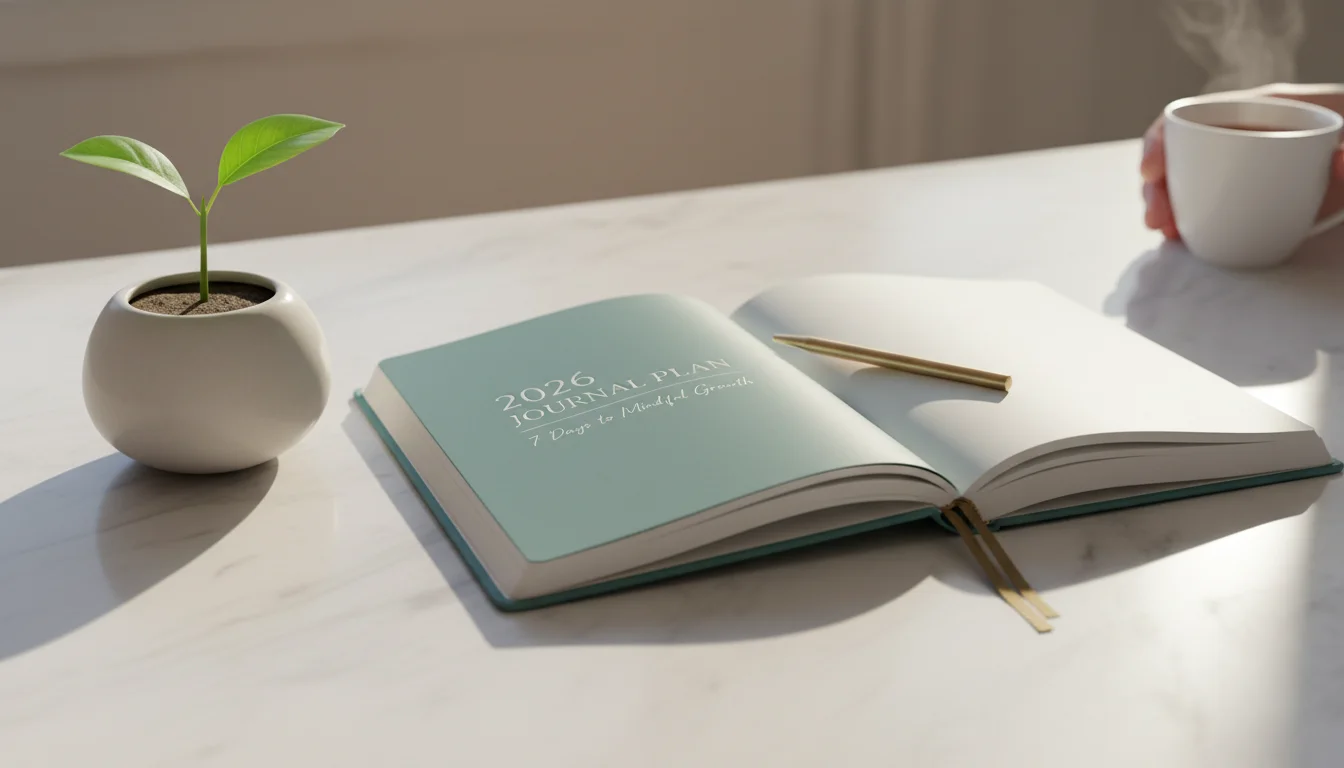
To build a consistent habit, you need a ritual. For journaling, that means setting aside a specific spot and a fixed time every single day. I’ve found that a quiet corner, far from any digital screens, really helps me focus. My own setup is just a small desk in a room with some sun, a comfortable chair, my journal, and a pen that writes well. The point is to create a space that tells your brain, “okay, this is reflection time.” As for timing, it’s the consistency that matters, not how long you do it. Try to find 10 or 15 minutes, either first thing in the morning before your day gets crazy or in the evening to wind down. I’m one of many people who find that morning journaling clears out all the mental clutter and sets a better tone for the day, while evening sessions give you a chance to process everything before you go to sleep. You have to experiment and see which works for you. A 2023 study in the Journal of Clinical Psychology actually confirmed that showing up consistently, even for short sessions, was a way better predictor of journaling’s psychological benefits than how long any single session was [Source: Journal of Clinical Psychology](https://onlinelibrary.wiley.com/journal/10974679). Pro Tip: If you’re a morning journaler, put your notebook and pen out in your spot the night before. It’s a simple little thing that removes one less hurdle when you’re still groggy.
2. Choose Your Tools: Analog or Digital?
Picking between a physical notebook and a digital app is totally personal, and both have their pros and cons for this kind of work. For people who are more tactile, the physical act of writing can feel incredibly grounding. There’s a realness and intimacy to a paper notebook that a screen just can’t always replicate. I usually tell people to start with a simple, unlined notebook because it feels less restrictive and encourages you to just let your thoughts flow. You can get something nice from brands like Leuchtturm1917 or Moleskine, but honestly, any notebook you like writing in will work just fine. On the other hand, digital apps give you amazing searchability, organization, and portability. Apps like Day One or Journey.cloud let you tag your entries, drop in photos, and even record audio memos to make your reflections richer. In Day One, for example, you can create custom templates for your daily prompts, so you don’t have to retype the same questions every day. Plus, its “On This Day” feature is a surprisingly powerful way to see how you’ve grown over the years. My personal setup is Day One because it syncs across my phone, tablet, and computer, which means I can journal wherever I happen to be and have no excuse not to. Common Mistake: Agonizing over finding the “perfect” tool. The best journal or app is the one you actually use. Just start with whatever you have, even if it’s the notes app on your phone.
3. Day 1: The Free-Form Brain Dump
Your first day is all about getting the junk out of your head. Don’t think about structure, grammar, or if you’re even making sense. It’s a free-form brain dump. Just set a timer for 10-15 minutes and write down whatever pops into your head. It might be a to-do list, a rant about your morning, or thoughts about a weird dream. The only goal is to move thoughts from inside your mind to the page (or screen). When I’m walking clients through this, I tell them to picture their mind as a messy room and this is the step where you just pull everything out and throw it on the floor. We’ll sort it out later. Just the act of getting these thoughts outside of yourself can make them feel less powerful and create some mental breathing room. This first dump often shines a light on anxieties or priorities you didn’t even realize were there. For instance, you might notice you keep writing about a work project, which is a big signal that it’s taking up a lot of your unconscious stress. Screenshot Description: A blank page in a digital journaling app like Day One, showing only the date at the top and a blinking cursor, ready for text input. No specific settings are visible other than the default font and background.
4. Day 2: Gratitude and Small Victories
On Day 2, we’re going to shift gears. Do a quick 5-minute free-write first, then spend the rest of your time focusing on gratitude and small victories. Science backs this up. A 2024 meta-analysis in Positive Psychology Quarterly found a significant link between regularly practicing gratitude and having fewer symptoms of depression and higher life satisfaction [Source: Positive Psychology Quarterly](https://www.positivepsychology.com/gratitude-research/). Ask yourself these questions:
- What three specific things am I grateful for today, no matter how small? (e.g., “the warmth of my coffee,” “a thoughtful email from a colleague,” “five minutes of quiet”).
- What small victory did I achieve today? (e.g., “finished that tricky spreadsheet,” “went for a walk,” “resisted checking social media for an hour”).
- Who or what brought a moment of joy or peace into my day?
You have to get specific. Instead of just writing “I’m grateful for my family,” try something like “I’m grateful my sister called this morning because she made me laugh.” Being this specific is what really deepens the emotional punch of the reflection. Pro Tip: Don’t just make a list. For each item, write a quick sentence about why it made you grateful. It forces you to engage more of your brain.
Get smooth and event-ready
Look and feel your best for every occasion. Find a waxing studio near you and book ahead.
Find a Studio Near You →5. Day 3: Exploring Emotions and Triggers
Today, it’s time to get into your emotional world. After your usual free-form entry, focus on a specific emotional experience from your day. This is where journaling goes from just writing things down to actual self-reflection. Spend your 10-15 minutes on prompts like these:
- What was the strongest emotion I felt today? Where did I feel it in my body?
- What specific event or conversation triggered that feeling?
- How did I react? Was my reaction helpful or not so helpful?
- If I could have a do-over of that moment, what’s something I might try differently?
So, if you felt a surge of frustration in a meeting, you’d write about the exact comment that set it off, the feeling of your shoulders tensing up, and whether your decision to stay quiet was a conscious choice or more of a reactive freeze. This isn’t about beating yourself up. It’s just observation. It’s about understanding the mechanics of you. This kind of detailed emotional mapping is a core part of building emotional intelligence, a point often made by the experts at the Yale Center for Emotional Intelligence [Source: Yale Center for Emotional Intelligence](https://www.ycei.org/what-we-do/research).
6. Day 4: Identifying Limiting Beliefs and Strengths
Now that we’re mid-week, let’s look at the stories you tell yourself. Our beliefs literally create our reality, and sometimes we have these unconscious limiting beliefs that are holding us back without us even knowing it. At the same time, we need to see our own strengths. Try these prompts:
- What’s a belief I have about myself that might be limiting me? Where did I even get that idea? (e.g., “I’m not good at public speaking,” which might trace back to some embarrassing moment in school).
- What’s a strength I used today, even a small one? How could I use that strength more?
- What’s one positive affirmation I can tell myself today?
This one takes some real honesty and a lot of self-compassion. It’s hard work to face your own internal roadblocks, but you can’t start changing them until you see them clearly. I have to remind myself all the time that a belief isn’t a fact. It’s just a thought I’ve had on repeat. Common Mistake: Getting bogged down in self-criticism. The goal here is just to identify the belief, not to condemn yourself for having it. Be curious about your limiting beliefs, not judgmental.
7. Day 5: Future Self and Intentions
As we get toward the end of the week, let’s turn our attention to the future. Mindful journaling is a great tool for actively designing the future you want to live in. For today’s entry, think about this:
- What kind of person do I want to be in six months? What are their qualities?
- What’s one small, real step I can take today that moves me toward becoming that person?
- What’s my intention for tomorrow?
This is straight out of positive psychology. Visualizing the future you want actually motivates you to take action in the present. Get really specific about the behaviors and habits of this future self. For example, if your future self is more organized, maybe your small step for today is just to spend 10 minutes cleaning off your desk. Screenshot Description: A digital journaling app entry with bullet points outlining future goals and intentions, perhaps color-coded or using different font styles for emphasis. The entry is clearly dated “Day 5” or similar.
8. Day 6: Review and Reflect on the Week
Today you’re going to pull it all together. Go back and re-read your entries from Day 1 through Day 5. This is the meta-reflection step, and it’s often where the biggest “aha!” moments happen. As you’re reading, ask yourself:
- What themes or emotions kept popping up all week?
- Did I discover anything surprising about myself?
- What patterns in my thinking or behavior are obvious now?
- What’s the one biggest takeaway I got from journaling this week?
I find it super helpful to highlight or tag words that show up again and again in my digital journal. Most apps let you do this, which makes spotting patterns much easier. For example, if you see the word “overwhelmed” in three of your five entries, that’s a huge clue that you need to figure out what’s causing it. This kind of review gives you a 30,000-foot view of your own inner world, revealing trends you’d totally miss in the day-to-day.
9. Day 7: Planning for Continued Practice
On the last day of this one-week plan, the focus is on making the habit stick. The point was never just to get through seven days. It was to build something you can use for the long haul. So, for your last entry, think about these questions:
- How did this week of journaling actually feel? What was good about it? What was hard?
- What changes do I need to make to keep this going? (Maybe a different time of day, a new journal, or different prompts).
- What’s one specific goal for my journaling practice over the next month? (e.g., “I want to use my journal to explore my creative side,” or “I want to consistently track how I react to disagreements.”).
This planning part is what makes the difference between a habit that lasts and one that fades out after a week. You have to create your own feedback loop: reflect on how the process is working, and then tweak it. Building a journaling habit is a process of self-discovery, and it’s a powerful way to grow as a person and build your emotional intelligence. This 1-week structure gives you a solid launchpad to get deeper insights into your thoughts, feelings, and goals, helping you live a more intentional life.
What if I miss a day?
Don’t let one missed day kill the whole thing. Just get back to it the next day. The goal is long-term consistency, not a perfect, unbroken streak.
How do I make it more “mindful”?
Before you start writing, just focus on your breathing for a minute or two. As you write, pay attention to the physical sensations, the feel of the pen, the sound of the keys. Try not to judge your thoughts, just watch them show up on the page.
Should I always use certain prompts?
The prompts in this guide are a great place to start, but the best prompts are the ones that actually mean something to you. Play around with different questions and see what kind of prompts actually help you learn something about yourself.
How do I get past writer’s block?
If you’re staring at a blank page, just start writing “I don’t know what to write” over and over until something else comes out. It almost always works. Or, you could just describe your physical surroundings in detail or write about a random object in the room.
Should I share my journal with anyone?
Journaling is really a private thing, a space for you to be totally honest with yourself. Sharing the insights you gain can be helpful, but the raw entries are probably best kept private so you always feel safe being unfiltered. It’s completely your call.


